

Introducing two cats isn’t a weekend project. It’s a 3–8 week process that rewards patience and punishes shortcuts. The internet will tell you stories about cats who became instant friends — those cats exist, but they’re rare. Most cats need weeks of careful exposure before they’re calm sharing space, and some need longer. Some cats will never be suited to cohabitation, and recognizing that early is responsible care, not a planning failure.
This guide walks through the phases: assessing whether your cats are candidates, separation, scent swapping, visual contact through a barrier, supervised time together, and eventual cohabitation (or permanent separation, if that’s the humane answer). Each phase has clear checkpoints. You’ll know when to move forward and when to slow down.
Are these cats good candidates for introduction?
Not all cats are wired for multi-cat living. Before you begin the introduction process, assess both cats honestly. According to International Cat Care, cats are solitary hunters by nature, and while many adapt to living with other cats, temperament and prior socialization matter more than age or breed.
Screen your resident cat:
- Territorial aggressor: Does your cat guard doorways, hiss at outdoor cats through windows, or spray/mark frequently? Territorial cats can integrate with careful work, but they need significantly longer timelines (12+ weeks) and may never tolerate a confident, assertive newcomer.
- Socially confident: Does your cat approach strangers (human or animal) with curiosity rather than hiding? These cats generally adapt faster but may overwhelm a fearful newcomer.
- Fearful or trauma-bonded: Has your cat lived alone for years, or did they have a traumatic experience with another cat? These cats may never feel safe with a companion, and forcing cohabitation creates chronic stress.
Screen your new cat:
- Prior socialization: Cats who lived peacefully with other cats in foster care or prior homes adapt more easily. Cats with no known cat exposure are unknowns.
- Play style: High-energy kittens can torment a senior cat even if neither is aggressive. Age-matched energy levels matter.
- Resource guarding: If the shelter or foster reports food aggression or litter box guarding, this cat may need permanent solo resources or may not be a multi-cat candidate.
The honest answer: If your resident cat has spent five years as a confident solo cat and shows signs of territoriality, and you’re bringing home another confident adult, the odds of peaceful integration drop significantly. Kittens under six months are more adaptable. Fearful cats paired with assertive cats rarely work out. If you’re uncertain, consult a veterinary behaviorist before committing to the new cat.
What you’ll need
Tools:
- Baby gate or door wedge (to control visual access)
- Separate litter boxes (minimum one per cat, ideally three total)
- Separate food and water bowls
- Soft cloths or towels for scent swapping
Materials:
- Cat carrier for transport
- Feliway diffuser (optional; evidence-based for stress reduction)
- Cardboard boxes or cat tree for hiding spots
- High-value treats for positive associations
Prerequisites:
- New cat must be vet-checked, vaccinated, and FeLV/FIV-tested before entering your home
- Resident cat should be current on vaccines
- You need a room with a door that closes completely (bathroom, bedroom, or spare room)
Before you start
This is not a process you can rush without consequences. Forced cohabitation before readiness creates stress that shows up as hiding, resource guarding, litter box avoidance, and sometimes permanent aggression. The ASPCA recommends a minimum of several weeks for most introductions, and some cats need months. Neither timeline indicates a problem as long as you’re observing calm behavior at each phase.
Critical medical warning: Introduction stress can trigger or unmask serious health conditions. Stress is a known trigger for feline lower urinary tract disease (FLUTD), which causes painful urination, straining, and potential blockage — a life-threatening emergency. Stress also suppresses immune function, revealing latent illnesses, and can trigger inflammatory bowel disease flares. If either cat shows straining in the litter box, blood in urine, diarrhea, vomiting, lethargy, or stops eating during any phase of introduction, contact your vet immediately. These are not “just stress” — they require medical evaluation.
Safety note: If at any point you see injury (scratches, bites, punctures), separate immediately and contact your vet. Bite wounds abscess easily in cats.
Set up the separate room before bringing the new cat home. The resident cat should not have access during setup to prevent territorial marking.
Step 1: Set up the safe room
Choose a room with a door that closes completely. This is the new cat’s space for the first 1–2 weeks minimum. Set up:
- Litter box in one corner
- Food and water bowls in the opposite corner (cats don’t like to eat near their elimination area)
- Hiding spot — cardboard box on its side, cat tree with enclosed levels, or space under furniture
- Toys and a soft blanket or towel for scent comfort
The new cat should be able to eat, drink, eliminate, and hide without leaving this room. Don’t place resources where the cat must cross open space to reach them — stress makes cats avoid exposure.
Step 2: Bring the new cat home and maintain separation
Transport the new cat directly into the safe room in a carrier. Open the carrier door and leave the room. Let the cat emerge on their own timeline — don’t pull them out. Some cats explore immediately; others hide for hours. Both are normal.
Keep the new cat in this room for a minimum of 3–7 days. Some cats need two weeks before they’re calm enough for the next phase. During this time:
- Feed both cats on opposite sides of the closed door at the same time (creates positive association with each other’s scent)
- The resident cat will likely sniff under the door, pace, hiss, or ignore it entirely — all normal responses
- Check on the new cat regularly but don’t force interaction; let them approach you
- Monitor eating and elimination closely: If either cat refuses food for more than 12 hours or shows litter box changes (straining, avoiding the box, blood), contact your vet. Introduction stress can trigger medical emergencies.
The goal is for both cats to hear and smell each other without visual contact or physical access.
Step 3: Swap scents
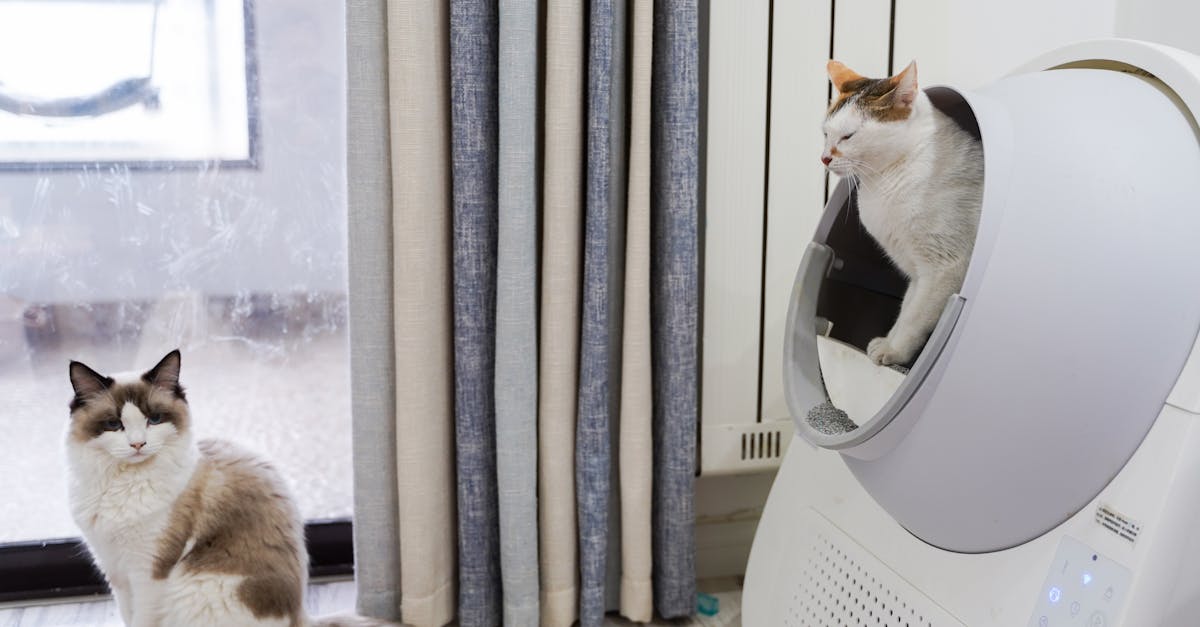
Starting around day 3, begin scent swapping:
- Rub a soft cloth on the new cat’s cheeks and chin (where facial glands are)
- Place that cloth near the resident cat’s food bowl or favorite sleeping spot
- Repeat in reverse — rub a cloth on the resident cat, place it in the new cat’s room
- Swap their used bedding or toys
You can also give each cat a chance to explore the other’s space while the other is confined. Put the resident cat in a separate room, let the new cat explore the main house for 15 minutes, then reverse.
If either cat hisses at or avoids the scent-swapped items, that’s fine. They’re processing. Continue daily swaps. The goal is familiarity, not affection.
Step 4: Introduce visual contact through a barrier
Once both cats are eating normally near the door and not constantly hissing at it (usually 7–14 days in), crack the door a few inches or install a baby gate.
During the first visual session:
- Keep it short — 5–10 minutes
- Stay present and alert
- Watch body language on both sides (see below for green/yellow/red signals)
- End the session on a calm note; don’t wait for a fight to close the door
Green light signs: Sniffing from a distance, casual movement, sitting down, grooming, ignoring each other, eating treats while aware of the other cat.
Yellow light signs: Stiff body, staring without blinking, slow stalking, tail twitching, low growling. Cats are stressed but not fighting. End the session calmly.
Red light signs: Hissing, swatting, lunging, chasing, fur fully raised, pinned ears. Stop immediately. Go back to scent swapping for another 3–5 days.
Repeat daily visual sessions, gradually extending time as both cats stay in the green zone. This phase can take 1–3 weeks.
Red flag checkpoint: If you’re still seeing red-light behavior after three weeks of visual sessions, these cats may be incompatible. Consult a feline behaviorist before proceeding. Forcing the process past this point creates chronic stress.
Step 5: Allow supervised time together
When both cats can see each other through the barrier without hissing or stiff posturing for a full 10-minute session, open the door fully — but only when you’re home and alert.
First sessions:
- 15–30 minutes maximum
- Make sure both cats have escape routes — the new cat should be able to reach a high shelf or cat tree, not get cornered
- The resident cat should have clear access back to their usual areas
- Keep high-value treats or toys on hand to redirect if needed
- Separate them before tension escalates, not after a fight
Over the next 1–3 weeks, extend these sessions to several hours. Let them coexist during the day while you’re home. Separate them at night and when you leave until you’ve observed at least one week of calm behavior together.
Some cats will play. Others will simply ignore each other or occupy different parts of the room. Both outcomes are success. “Bonded pair” behavior (sleeping together, grooming each other) is a bonus, not the goal.
Step 6: Transition to cohabitation

Once both cats have been calm together during multiple multi-hour sessions and you’ve seen no red-light behavior for at least a week, you can leave them unsupervised.
Critical: Maintain separate litter boxes (minimum two, ideally three), separate food bowls, and separate water bowls permanently. Shared resources create competition stress even in cats who appear to get along. The standard rule is one litter box per cat, plus one extra.
Continue monitoring eating and litter box use separately for the first month. Changes in appetite or elimination can indicate covert stress or stress-triggered illness. According to the Merck Veterinary Manual, stress-related medical conditions often appear weeks after the initial stressor, so vigilance during this period is critical.
Verify it worked
Successful integration looks like:
- Both cats eating normally and using the litter box consistently
- Neither cat hiding for extended periods
- No ongoing aggression (occasional hissing during play is different from stalking and attacking)
- Both cats able to move freely through the house without one controlling access to resources
Remember: coexisting peacefully is the goal. Friendship is optional.
When permanent separation is the right choice
Some cats cannot live together safely or without chronic stress. This is not a moral failure. It’s biology. Recognizing incompatibility and maintaining permanent separation is responsible, humane care.
Signs these cats should not cohabit:
- Persistent fear response beyond eight weeks: One cat hides constantly, refuses to eat normally, or eliminates outside the box due to fear of the other cat. This is not “adjusting” — it’s chronic stress that shortens lifespan and quality of life.
- Escalating or unrelenting aggression: One cat stalks, blocks access to resources, or attacks unprovoked even after 10–12 weeks of careful introduction. If a behaviorist consult hasn’t resolved it, these cats are incompatible.
- Stress-induced medical crises: If either cat has had repeat vet visits for stress-triggered FLUTD, diarrhea, or immune-related illness during the introduction, their body is telling you this living situation is unsustainable.
- Incompatible play styles causing harm: A high-energy young cat relentlessly harassing a senior or disabled cat, even without malice, is a welfare issue. The older cat deserves peace.
What permanent separation looks like: The cats live in separate areas of your home with solid barriers (not baby gates). Each has their own resources, territory, and time with you. Some households rotate — one cat has the main house during the day, the other at night. This works. It’s not a failure.
If you’re fostering or adopting and realize within the first month that the match won’t work, returning the new cat to the rescue or shelter is the ethical choice. Most rescues prefer this outcome over a stressed cat forced into an incompatible home.
Troubleshooting
Problem: One cat hides constantly and won’t come out even after two weeks in the safe room
This is a temperament issue, not an introduction failure. Extend Phase 2 indefinitely — some cats need a month of safe room time before they’re confident. Provide more vertical hiding spots (boxes on shelves, cat tree with enclosed levels). If hiding persists past six weeks, consult a feline behaviorist. This cat may need permanent sanctuary space, or may not be suited to multi-cat living.
Problem: Resident cat is aggressive; new cat is meek and avoidant
High-risk scenario. Slow down significantly. Go back to Phase 3 (scent swapping only) for another week. Consider a Feliway diffuser — synthetic pheromones are evidence-based for reducing stress in multi-cat households. Ensure the meek cat has guaranteed escape routes and “owns” one area (like a cat tree near a window where the resident cat rarely goes). If aggression continues after eight weeks of careful reintroduction, these cats may be incompatible. Permanent separation is the humane answer.
Problem: They seemed fine, then suddenly started fighting after a week together
Delayed stress reaction. Some cats mask discomfort until it erupts. Separate them back to Phase 4 (visual contact through barrier) and rebuild more slowly. Check that you’re maintaining separate resources — resource guarding can appear days after initial cohabitation. Watch for signs that one cat is blocking the other’s access to litter boxes or food.
Problem: One cat stopped eating or started eliminating outside the litter box
Contact your vet immediately. Introduction stress can trigger feline idiopathic cystitis (a form of FLUTD), inflammatory bowel disease, or suppress immune function enough to activate latent infections. Rule out medical causes before attributing changes purely to behavioral stress. If your vet confirms it’s stress-related illness, you may need to slow or stop the introduction permanently.
Problem: One cat is straining in the litter box, crying, or producing bloody urine
This is a veterinary emergency. Male cats can develop urinary blockages (a life-threatening condition) within hours. Do not wait. Stress is a known trigger for these crises, and they require immediate medical intervention. Even if the introduction was going well, separate the cats and get to a vet or emergency clinic now.
When to call a professional
Contact a certified feline behaviorist if:
- Aggression escalates after eight weeks of careful introduction
- One cat is consistently aggressive and the other shows fear behaviors (hiding, eliminating outside box, appetite loss)
- You’ve tried the full protocol twice and they’re still fighting
- You need help deciding whether permanent separation is the right choice
Contact your vet immediately if:
- Either cat stops eating for more than 24 hours
- Litter box use changes (straining, blood, going outside the box, crying during urination)
- You see bite wounds or scratches
- Lethargy, hiding, vomiting, or diarrhea persists beyond one day
Some cats are simply incompatible. Permanent separation is a valid outcome that prevents chronic stress. That’s not a failure — it’s responsible cat care.
FAQ
How long does it take to introduce two cats?
Three to eight weeks is standard for most cats. Some integrate faster; others need longer. Judge progress by behavior at each phase, not by a fixed calendar. If both cats are calm and eating normally, you’re on track even if you’re at week six. If you’re past 10–12 weeks and still seeing aggression or fear, consult a behaviorist to assess whether these cats are compatible.
Do I need to buy Feliway or calming products?
Not required, but Feliway (synthetic feline pheromone) is evidence-based for reducing stress in multi-cat homes. Calming treats and supplements are less rigorously tested. If you’re considering them, discuss with your vet first.
Can I introduce a kitten to an adult cat using the same method?
Yes. Kittens are often more adaptable, but adult cats may take longer to accept them. Age pairing doesn’t guarantee success — temperament matters more. Follow the same phases and watch for signs the adult cat is overwhelmed (constant hiding from a pestering kitten, refusal to eat, aggression). Kittens have higher energy and may need separate play sessions to avoid exhausting the adult. Senior cats (10+) paired with kittens under six months often struggle with the energy mismatch. That’s a welfare concern, not a training issue.
What if they hiss at each other during Phase 4?
Some hissing during early visual contact is normal. It’s communication, not automatic incompatibility. If hissing happens but both cats stay in the area, continue short sessions. If hissing escalates to swatting or one cat bolts, end the session and extend Phase 3 (scent swapping) for a few more days before trying again.
Should I punish them if they fight?
No. Punishment increases fear and can create negative associations with each other. Instead, interrupt with a loud noise (clap, shake a can of coins), separate them, and go back a phase. If fighting happens more than once, you’re moving too fast. If fighting continues after you’ve slowed down and consulted a behaviorist, these cats may not be compatible.
How do I know if my cat’s stress symptoms are medical or behavioral?
You don’t — and you shouldn’t guess. Stress-triggered medical conditions (FLUTD, IBD, immune suppression) present identically to behavioral stress initially. Any change in eating, litter box use, energy level, or grooming during an introduction requires a vet visit to rule out illness. Waiting to see if it resolves on its own risks a cat’s health.
Most cat introductions fail because someone got impatient at week two. The cats who “worked it out on their own” are the ones whose owners got lucky with temperament matches. For everyone else, this process works if you follow it. Three weeks feels long when you’re in it. Three years of a stressed, hiding cat because you rushed feels much longer. And knowing when to choose permanent separation over forcing cohabitation is the mark of a responsible cat owner.
For more on reading cat behavior during this process, see cat body language guide. If you’re setting up multiple litter boxes and running into issues, litter box problems covers placement and resource guarding. And if you’re preparing your home for a second cat, best cat trees multi cat homes helps with vertical territory setup.