
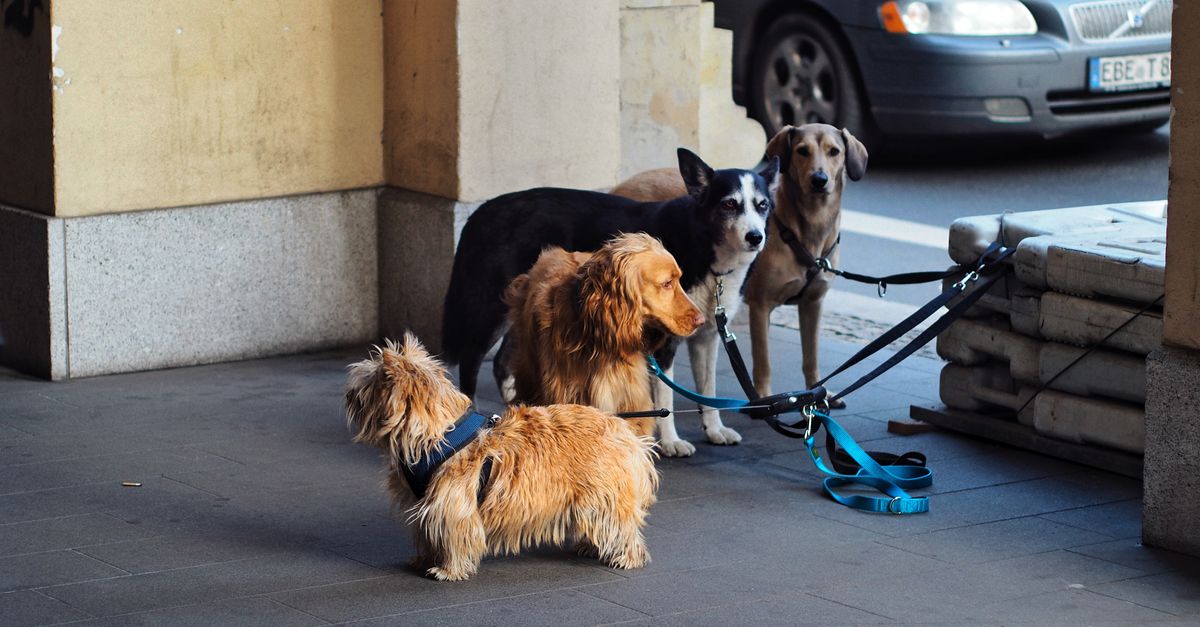
A dog pulling hard on a collar risks tracheal damage, thyroid injury, and laryngeal dysfunction. But not all harnesses solve the pulling problem. A back-clip harness protects the throat without addressing the behavior; a front-clip harness redirects the dog’s momentum so pulling becomes mechanically unrewarding. The difference is physics, not marketing.
Quick verdict:
- Front-clip harnesses are the best choice for dogs that pull consistently on walks
- Dual-clip harnesses are the best choice for owners who want training flexibility or situational control
- Back-clip harnesses are the best choice for dogs already trained not to pull (comfort and safety only)
At a glance
| Feature | Front-Clip | Dual-Clip | Back-Clip |
|---|---|---|---|
| Redirects pulling | Yes | Yes (front mode) | No |
| Protects throat | Yes | Yes | Yes |
| Best for | Active pullers | Dogs in training | Trained non-pullers |
| Acclimation period | 1-2 weeks | 1-2 weeks | Minimal |
| Biggest weakness | Requires precise fit | Bulkier design | Doesn’t address pulling behavior |
How to measure and fit a harness
Harness fit determines whether the tool works or becomes a chafing, slipping, ineffective piece of nylon. Most pulling problems blamed on “harnesses don’t work” trace back to incorrect sizing.
Measure chest girth: Use a soft measuring tape around the widest part of your dog’s ribcage, just behind the front legs. Add two fingers’ width of slack—the harness should sit snug but not compress the ribs. Compare this measurement to the manufacturer’s size chart, not to your dog’s weight. A 50-pound Labrador and a 50-pound Greyhound need different sizes.
Strap placement for front-clip harnesses: The chest strap should sit across the sternum (breastbone), roughly where a human would wear a tie. Too high and it rides into the throat during pulls; too low and it slips under the armpits or loses mechanical advantage. The back strap should rest behind the shoulder blades, not on top of them—shoulder-blade pressure restricts gait.
Common fit errors:
- Oversizing to avoid tightness: A loose harness allows the dog to slip out or negates the front-clip’s redirection. If you can pull the harness over the dog’s head without unbuckling, it’s too large.
- Undersizing to “control better”: A harness that compresses the ribcage or digs into armpits causes pain and creates a negative association. The AVMA’s guidance on training equipment emphasizes that aversive fit defeats the purpose of humane tools.
- Ignoring breed-specific anatomy: Sighthounds (Greyhounds, Whippets, Italian Greyhounds) have deep chests and narrow waists; standard sizing often doesn’t fit. Barrel-chested breeds (Bulldogs, Pit Bulls) need wider chest straps to distribute pressure. Short-legged dogs (Corgis, Dachshunds) are prone to strap rubbing on the backs of front legs—look for models with higher leg clearance.
Check for rubbing after the first 15 minutes of wear. Red marks that disappear within an hour are normal break-in friction; marks that persist or show hair loss indicate a fit problem.
Front-clip harnesses — best for dogs that pull
When the leash attaches to a ring on the dog’s chest, pulling creates an automatic consequence: the dog turns toward you instead of continuing forward. This is passive redirection, not pain or fear-based correction. Research on dog-training methods and welfare shows that front-clip designs reduce pulling frequency by interrupting the reward cycle of forward motion without the stress-related behaviors associated with aversive collars.
The Easy Walk Harness by Premier is the industry standard here. It’s been tested in shelter environments where staff handle dozens of unfamiliar dogs daily, many of them strong pullers. The chest strap sits low enough to avoid armpit chafing but high enough to redirect effectively. Pricing as of June 2026 runs $25–$35 depending on size.
Strengths:
- Redirects pulling without choking or causing pain
- Certified Professional Dog Trainer (CPDT) consensus choice for humane pulling management
- Works on the first walk for most dogs (though full acclimation takes longer)
Weaknesses:
- Fit is critical—a harness two sizes too large will slip and lose effectiveness
- Some dogs require 1–2 weeks to stop resisting the chest strap
- Can cause mild shoulder rotation during extreme lunges if sized incorrectly
Breed-specific caution: Front-clip harnesses work well for most dogs, but veterinary behavioral guidance notes that dogs with existing shoulder or elbow arthritis may experience discomfort from the redirection motion. For these dogs, back-clip harnesses paired with intensive loose-leash training may be safer. Greyhounds and Italian Greyhounds have sensitive, thin-skinned chests—look for models with padded chest straps or consider a dual-clip harness used primarily in back-clip mode.
Best for: Owners managing medium to large dogs that pull hard, reactive dogs that need gentle redirection, and anyone prioritizing throat safety without resorting to aversive collars.
The front-clip mechanism is the only harness design that actively discourages pulling. If your dog launches at every squirrel, this is where you start.
Dual-clip harnesses — best for training flexibility
Dual-clip harnesses offer both front and back attachment points, letting you choose based on the walk. Start with the front clip during training; switch to the back clip once loose-leash walking is reliable. This flexibility makes them ideal for dogs in behavioral transition.
The Freedom No-Pull Harness by Blue-9 is the best-known dual-clip model. It includes both a front chest ring and a back ring, plus a velvet-lined chest strap to reduce chafing during the acclimation period. The design prioritizes the front-clip function—the back clip is an option, not the default. Pricing as of June 2026: $30–$45.
For budget-conscious owners, the Rabbitgoo Adjustable Dog Harness offers dual-clip functionality at $20–$28. It’s widely available and has thousands of verified owner reviews on Chewy and Amazon. The trade-off: less durable stitching and a slightly bulkier fit compared to premium models.
Strengths:
- Flexibility for different training stages and walking environments
- Front-clip benefits when you need them; back-clip comfort when you don’t
- Useful for multi-dog households where one dog pulls and another doesn’t
Weaknesses:
- Slightly bulkier than single-clip designs
- Front-clip effectiveness may be reduced if the harness design prioritizes back-clip comfort
- More expensive than dedicated front-clip or back-clip harnesses
Best for: Owners actively training their dog to walk politely on leash, households with multiple dogs at different training levels, and anyone who wants one harness that covers multiple scenarios.
If you’re pairing harness use with how to train loose leash walking, a dual-clip lets you reward progress by switching to back-clip mode.
Back-clip harnesses — best for trained non-pullers

Back-clip harnesses distribute force across the ribcage instead of the throat, which protects dogs with tracheal sensitivity or brachycephalic breeds prone to breathing issues. But they do not redirect pulling. A strong dog can still pull forward effectively—the harness just prevents neck injury while they do it.
These harnesses are common in pet stores because they’re easy to put on and remove. They work well for puppies, toy breeds, and dogs that already walk politely on leash. If your dog doesn’t pull, a back-clip harness is a comfortable, low-intervention choice.
Strengths:
- Protects the throat without behavioral redirection
- Comfortable for all-day wear (hiking, long walks)
- Easiest to put on and take off
Weaknesses:
- Does not address pulling behavior—a puller will keep pulling
- Can cause rolling or twisting in the harness if the dog tugs hard to the side
- Not suitable for training or behavior management
Best for: Dogs that don’t pull, owners prioritizing comfort over behavioral control, and toy breeds or senior dogs where neck safety is the primary concern. Also the safer choice for dogs with documented shoulder or joint injuries where front-clip redirection could aggravate existing pain.
If your dog is a puller, a back-clip harness is not the solution. It’s a comfort upgrade over a collar, but it won’t change the walk dynamic.
Harness acclimation: what to expect
Most dogs don’t love the harness on day one. The chest strap feels restrictive, the fit is unfamiliar, and some dogs freeze or refuse to walk. This is normal initial resistance, not a sign the harness won’t work. Acclimation takes deliberate positive association, not just time.
Days 1–3: Introduction without pressure
- Place the harness on the floor with high-value treats on and around it. Let the dog investigate.
- Put the harness on indoors for 30–60 seconds, treat heavily, then remove it. Repeat 3–4 times daily.
- Expect resistance when you first buckle the chest strap. Some dogs freeze, back up, or paw at it. Distract with treats and short play sessions.
Days 4–7: Short test walks
- Harness on, walk to the end of the driveway or around the block. Keep it under 5 minutes.
- Treat the dog every few steps if they’re walking normally. Ignore pulling or freezing—redirect with a treat lure and keep moving.
- Most dogs stop the theatrical resistance (flailing, rolling) by day 5. If your dog is still panicking after a week, check the fit—pain or pinching will prevent acclimation.
Days 8–14: Gradual walk extension
- Increase walk length by 5 minutes every other day. By day 10, most dogs accept the harness as part of the walk routine.
- Front-clip redirection starts working once the dog stops fixating on the harness itself. You’ll notice less pulling as the mechanical disadvantage becomes clear to the dog.
- If pulling persists at the same intensity after two weeks, re-check fit (especially chest strap placement) and pair with active loose-leash training, not just harness reliance.
Distinguishing normal resistance from fit problems:
- Normal: Brief freezing when the harness first goes on, mild pawing at chest strap, reluctance that fades within 2–3 minutes of walking.
- Fit problem: Limping, holding a leg up, visible rubbing or red marks, persistent refusal to walk after 10+ minutes, yelping when the harness shifts during movement. If you see these signs, stop and reassess sizing and strap placement. The ASPCA’s training resources emphasize that properly fitted equipment should never cause pain.
Side-by-side: how they handle pulling
Front-clip: When the dog pulls, the leash attachment redirects their chest and shoulders toward you. This turns pulling into an automatic self-correction—the harder they pull, the more they turn. No shouting, no yanking. The physics does the work.
Dual-clip (front mode): Functions identically to a dedicated front-clip harness when using the chest ring. The back ring is there for post-training or low-distraction environments.
Back-clip: Distributes pulling force across the chest and shoulders, which protects the throat but allows forward motion to continue. The dog experiences no consequence for pulling, so the behavior persists.
If stopping the pulling behavior matters to you, the front attachment point is non-negotiable.
Side-by-side: fit and comfort

All three harness types require proper fit, but front-clip harnesses are the least forgiving. A front-clip harness that’s too loose will slip during a pull and lose effectiveness. Too tight, and it chafes armpits or restricts shoulder movement.
Back-clip harnesses are more forgiving because they don’t rely on precise chest positioning for mechanical advantage. Dual-clip harnesses split the difference—they need good fit for front-clip mode but are usable in back-clip mode even if sizing is slightly off.
Padded harnesses reduce rubbing but can trap heat in warm weather. Mesh designs breathe better but offer less padding. Most dogs acclimate to a well-fitted harness within a week.
Harness vs collar for pullers
Use a harness if:
- Your dog pulls hard on walks (collars risk tracheal damage and thyroid injury)
- You’re managing reactive or high-energy behavior (front-clip redirection is gentler than collar-based corrections)
- Your dog is a toy breed, brachycephalic breed, or has existing tracheal sensitivity
Consider a collar if:
- Your dog is already trained not to pull (a harness may be unnecessary)
- You’re walking indoors or in a fully controlled environment
- The collar is for ID tags only, and the leash attaches to a harness
Never use a choke chain, prong collar, or shock collar for pulling. Veterinary behavior research consistently shows that pain- and fear-based tools damage trust and are unnecessary given modern, humane alternatives. A front-clip harness provides the control without the harm.
For more on when collars make sense, see dog collar styles guide.
How we compared these
We reviewed veterinary consensus from Cornell University’s College of Veterinary Medicine and UC Davis School of Veterinary Medicine on throat safety and canine biomechanics, surveyed Certified Professional Dog Trainer (CPDT) recommendations for humane pulling management, and analyzed peer-reviewed research on training equipment. We also reviewed hundreds of verified owner reports on Chewy, Amazon, and Reddit’s r/dogtraining to identify common fit issues and acclimation patterns.
We did not conduct controlled testing with individual dogs—behavior and fit vary too widely for meaningful lab-style comparison. Instead, we relied on professional consensus and the aggregated experience of thousands of owners and trainers.
FAQ
Do harnesses encourage pulling?
No. The harness itself is neutral. A back-clip harness doesn’t stop pulling, which is why some people mistakenly think harnesses make it worse. A front-clip harness redirects pulling and discourages it by removing the reward (forward motion). Design matters.
How long does it take for a front-clip harness to work?
Most dogs show reduced pulling within 3–5 walks, but full acclimation can take 1–2 weeks. Some dogs resist the chest strap initially. Pair the harness with treats and short walks during the adjustment period. If your dog refuses to walk or shows signs of panic beyond normal nervousness, consult your vet to rule out pain or anxiety.
Can I leave a harness on my dog all day?
Not recommended. Harnesses can chafe or cause matting if worn continuously. Put the harness on for walks and remove it afterward. If your dog needs to wear gear indoors for safety (e.g., a puppy learning boundaries), use a flat collar with ID tags, not a harness.
What if my dog escapes the harness?
Escape usually means the harness is too large or incorrectly fitted. Measure your dog’s chest, compare to the sizing chart, and adjust all straps before each walk. Some dogs—especially sighthounds with narrow chests—are escape artists regardless of fit; for these dogs, consider a martingale-style harness designed to prevent backing out.
Should I use a harness with a retractable leash?
No. Retractable leashes reward pulling by allowing the dog to move forward, which cancels out the front-clip harness’s redirection effect. Use a standard 4–6 foot leash for training and behavior management. See best dog leashes for leash type comparisons.
Are there breeds that shouldn’t use front-clip harnesses?
Most dogs handle front-clip harnesses well, but breeds with existing joint issues or very sensitive chest anatomy may need adjustments. Greyhounds, Whippets, and Italian Greyhounds have thin-skinned chests where even padded straps can chafe—monitor closely during acclimation and consider dual-clip harnesses used primarily in back-clip mode. Dogs with diagnosed shoulder dysplasia, elbow arthritis, or chronic limping should be evaluated by your vet before using front-clip designs; the redirection motion can aggravate joint pain in these cases.
Affiliate disclosure: This article includes links to products. If you purchase through these links, PawsGuides may earn a commission at no additional cost to you. Our recommendations are based on veterinary consensus and professional trainer guidance, not affiliate relationships.
For most pullers, a front-clip harness is the clearest path to safer, calmer walks. Pair it with positive reinforcement training using dog training treats clicker training, and you’ll address both the mechanics and the behavior. If your dog is still learning, a dual-clip harness gives you the flexibility to meet them where they are.