

You notice bare patches on your cat’s belly, or thinning fur along their legs. They groom constantly—more than the usual fastidious licking—sometimes to the point of pulling out hair or creating raw spots. I’ve seen this pattern dozens of times: owners assume stress, try a calming collar, and watch the bald spots spread for weeks before booking a vet appointment. By then, what started as flea allergy dermatitis has become a secondary skin infection layered on top of anxiety grooming.
The short answer
Cats overgroom for two broad reasons: medical problems like fleas, skin allergies, fungal infections, or pain, or behavioral stress that triggers compulsive grooming. You can’t tell the difference by observation alone—many medical causes are invisible to the naked eye—which is why a vet exam with diagnostic testing is the mandatory first step, not the backup plan.
Medical causes come first, and testing tells you which one
The internet defaults to “your cat is stressed,” but veterinary protocol starts with medical rule-outs, because skin disease and pain are common, treatable, and often missed. Flea allergy dermatitis is the leading cause of overgrooming in cats—even a single flea bite can trigger intense itching in allergic cats, and you won’t see the fleas themselves if the cat is grooming them off constantly.
Your vet’s diagnostic roadmap typically includes:
- Wood’s lamp examination — A UV light that makes certain ringworm infections fluoresce. Not all ringworm strains glow, so a negative result doesn’t rule it out.
- Fungal culture — The definitive test for ringworm. Takes 10–14 days for results, but it’s the only way to confirm or eliminate fungal infection as the cause.
- Skin scraping — Checks for parasites like demodex mites, cheyletiella (walking dandruff), and scabies. These are microscopic and invisible to owners.
- Baseline bloodwork — Rules out systemic disease (hyperthyroidism, kidney disease, diabetes) that can cause skin changes or trigger stress grooming as a secondary response to feeling unwell.
If those come back clear and there’s no evidence of fleas, food allergy, or contact dermatitis, then the conversation shifts to behavioral causes. But you need the testing to get there—guessing wastes weeks and lets treatable conditions escalate.
Pain is the hidden culprit
Cats with arthritis, bladder inflammation, or abdominal discomfort will groom the painful area obsessively. A cat licking their lower belly may have cystitis; a cat chewing at their hips may have degenerative joint disease. The grooming looks behavioral, but the root cause is physical, and treating the pain stops the overgrooming. The AAHA’s feline life stage guidelines emphasize that any sudden increase in grooming frequency warrants a full physical exam, because cats mask pain until it’s severe—and grooming the sore spot is one of the few visible signs.
When it’s psychogenic alopecia (cat stress grooming)
If the vet rules out medical causes, you’re looking at psychogenic alopecia—hair loss caused by behavioral overgrooming. The cat grooms to self-soothe, much like a human biting their nails or picking at their skin under stress. The behavior becomes compulsive, and the cat continues even after the initial stressor is gone.
Common triggers include multi-cat tension (even if they’re not fighting outright—see how to introduce cats properly), household changes like a new baby or a move, schedule disruptions, or lack of environmental enrichment. Indoor cats are not immune to stress; they’re more vulnerable when their environment is static and under-stimulating.
Cats are meticulous about routine. A change in your work schedule, a rearranged living room, or a new pet in the home can all register as threats. The grooming becomes a coping mechanism, but it doesn’t address the underlying anxiety.
Alopecia in cats: what you’ll see
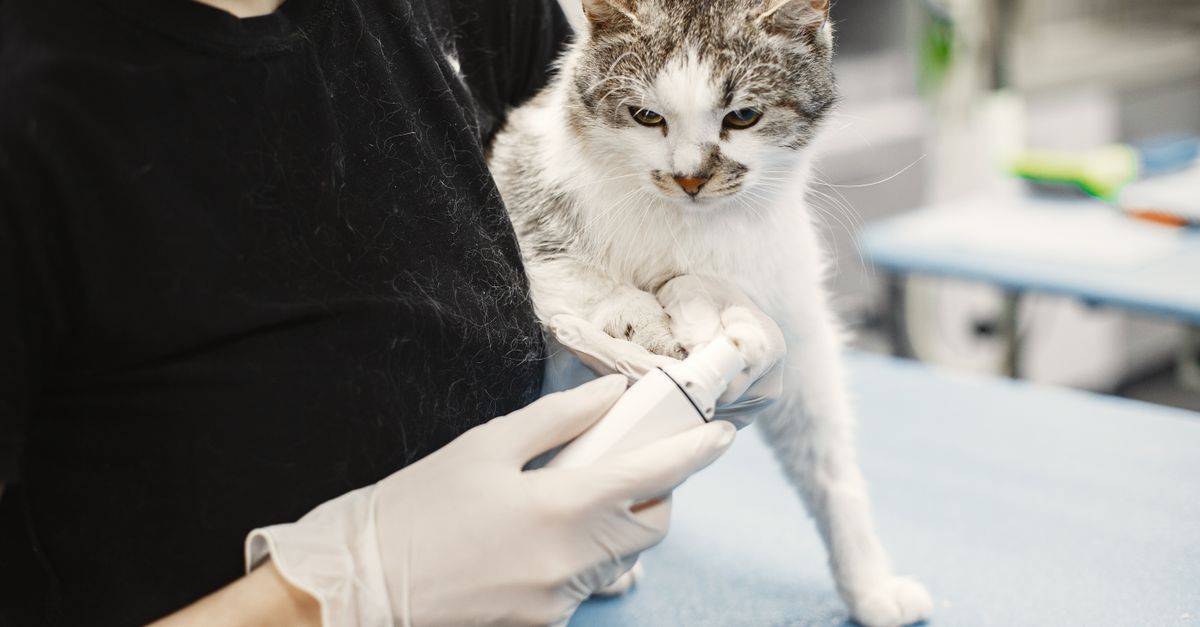
Alopecia in cats is the clinical term for hair loss, and it looks different depending on the cause. Overgrooming-related alopecia is typically symmetrical—both sides of the belly, both inner thighs, both flanks. The skin underneath is usually normal (no redness, scaling, or bumps), which distinguishes it from infectious or allergic skin disease. You may catch the cat in the act of licking or plucking fur, or you may just find the bald spots and increased hairballs.
Medical alopecia is often asymmetrical, inflamed, or accompanied by skin lesions. If you see crusting, oozing, or red bumps, it’s not purely behavioral. But here’s the complication: a cat with flea allergy dermatitis may develop stress grooming on top of the medical issue, creating a mixed picture. That’s why the vet exam and testing matter—treating the fleas won’t stop the grooming if anxiety has taken root.
Treatment pathways depend on the diagnosis
Once you know the cause, treatment becomes specific rather than guesswork:
For flea allergy dermatitis: Year-round flea prevention (topical or oral) plus antihistamines or corticosteroids to manage the allergic reaction. Skin healing takes 4–8 weeks if re-exposure to fleas is prevented. A single flea bite during treatment resets the clock.
For bacterial skin infection (secondary pyoderma): Oral or topical antibiotics for 3–6 weeks, depending on severity. The infection developed because overgrooming damaged the skin barrier, so you’re also treating the underlying cause (medical or behavioral) to prevent recurrence.
For psychogenic alopecia: Behavioral medications—SSRIs like fluoxetine, tricyclics like clomipramine, or trazodone—are used in cats with severe compulsive grooming, always in combination with environmental modification. Medication alone won’t fix the problem; you’re treating the anxiety that drives the grooming, not sedating the cat into submission. Behavioral protocols with environmental enrichment typically take 6–12 weeks to show measurable improvement.
Concrete environmental interventions for stress grooming

Vague “enrichment” advice doesn’t help. Veterinary behaviorists recommend specific, measurable changes:
Vertical territory: At least two elevated perches per cat, placed in high-traffic areas (near windows, in living spaces). Cats under stress need vertical escape routes.
Litter box ratio: One box per cat plus one extra (1:cat+1 rule), placed in separate locations. Multi-cat tension often stems from forced bathroom sharing.
Feeding and water stations: Separate bowls for each cat, not a communal feeding area. Resource competition is a chronic stressor even in cats who appear to coexist peacefully.
Structured play: Two 10-minute interactive play sessions per day (wand toys, not lasers), scheduled at the same time. Routine consistency reduces ambient anxiety.
Puzzle feeders: Rotate at least three different styles weekly. Hunting and foraging are stress outlets for indoor cats with no prey access.
You can’t punish or distract a cat out of overgrooming. Yelling, spraying with water, or putting a cone on the cat without addressing the root cause will increase stress. The grooming is a symptom, not the problem.
The interesting wrinkle: secondary infections and escalation
Overgrooming doesn’t stay static. The constant licking damages the skin barrier, and damaged skin is vulnerable to bacterial infection. A cat who starts with psychogenic alopecia can develop secondary pyoderma (bacterial skin infection), which then causes real itching and pain, which drives more grooming. You end up with a medical problem layered on top of a behavioral one, and both need treatment.
There’s also behavioral escalation. Some cats progress from licking to chewing, biting, or self-mutilation. They create ulcers or hot spots that require wound care and sometimes sedation to heal. Once the behavior is that entrenched, environmental management alone won’t fix it—these cats need anti-anxiety medication and behavioral modification under veterinary guidance, and the recovery timeline extends to 12+ weeks.
When to see a vet
See a veterinarian if:
- You notice bald patches, thinning fur, or broken hair anywhere on your cat’s body
- Your cat is grooming to the point of causing skin damage—redness, sores, or bleeding
- The grooming is new, sudden, or increasing in frequency
- You see skin lesions, crusting, or signs of infection under the bald areas
- The cat is licking or biting at a specific area repeatedly (may indicate localized pain)
- Over-the-counter flea treatment hasn’t resolved the behavior within two weeks
Don’t wait to “see if it’s just stress.” Medical causes are common, treatable, and often invisible without diagnostic testing. If it is behavioral, early intervention prevents the grooming from becoming compulsive and permanently damaging hair follicles.
FAQ
Can indoor cats get fleas that cause overgrooming?
Yes. Fleas enter homes on clothing, other pets, or through open doors and windows. Even one flea can trigger overgrooming in cats with flea allergy dermatitis. Indoor cats still need year-round flea prevention.
Is overgrooming the same as hair loss in cats?
Not always. Alopecia in cats (hair loss) can result from overgrooming, but it can also happen without the cat licking—fungal infections, hormonal imbalances, and immune disorders cause hair to fall out on their own. Diagnostic testing (fungal culture, bloodwork, skin biopsy) distinguishes the two.
Will a calming collar stop my cat from overgrooming?
Calming collars or pheromone diffusers (like best feliway products) may help reduce cat stress grooming in mild cases, but they won’t address medical causes or severe behavioral compulsion. Use them as part of a larger environmental modification plan, not a standalone fix.
How long does it take for fur to grow back after overgrooming?
If the overgrooming stops, fur typically regrows in 6–12 weeks. But if the root cause isn’t treated, the behavior will continue and fur won’t recover. Chronic overgrooming can damage hair follicles and lead to permanent hair loss in severe cases.
What tests will my vet run for overgrooming?
Expect a Wood’s lamp exam (ringworm screening), fungal culture, skin scraping for parasites, and baseline bloodwork to rule out systemic disease. If those are negative and there’s no sign of fleas or food allergy, the diagnosis shifts to behavioral (psychogenic alopecia).
Overgrooming is your cat signaling that something is wrong—medically or behaviorally. Most causes are treatable once you have a diagnosis, which means vet exam and testing first, not trial-and-error environmental changes. For more on reading your cat’s stress signals before they escalate to compulsive grooming, see understanding cat body language and recognizing stress in cats. If cost is a concern, some pet insurance worth it policies cover behavioral consultations and diagnostics for conditions like psychogenic alopecia.