

The single most useful thing to know about fireworks anxiety: not all anxious dogs need the same help. A dog who startles once and recovers in twenty minutes needs a safe room and white noise. A dog who trembles for three hours, refuses food, and tries to bolt needs veterinary medication and a multi-week behavior plan. Most articles lump all anxiety together. This one doesn’t.
Fireworks trigger dogs because they’re loud, sudden, and unpredictable—the dog has no way to control or anticipate them. Unlike a vacuum cleaner you can turn off or a doorbell you can retrain around, fireworks happen on someone else’s schedule. That lack of control activates the flight-fight-freeze response, and without management, the anxiety can worsen year over year as the dog learns fireworks = threat.
I’ve fostered more than forty dogs, and the range of fireworks responses is enormous. Some barely noticed. Others panicked so badly they injured themselves trying to escape. What worked for the mildly worried beagle mix did nothing for the German shepherd with clinical noise phobia. So before you try anything, figure out where your dog sits on this spectrum.
Assess your dog’s anxiety level
Mild anxiety: Dog startles or paces for 10-20 minutes, then settles. May hide but responds to treats or toys. Recovers quickly once fireworks stop.
Moderate anxiety: Dog pants heavily, paces continuously, won’t eat or settle even in a familiar space. May bark, whine, or scratch at doors. Takes 1-2 hours to calm down after fireworks end.
Severe anxiety / noise phobia: Dog shows panic—excessive drooling, trembling that doesn’t stop, destructive behavior (breaking crate bars, throwing self at door), attempts to escape even at risk of injury. May refuse food/water for extended periods. Often anxious around other noises year-round (thunder, car backfires).
Once you know which category fits your dog, you’ll know which tools to reach for first.
What you’ll need
For all levels:
- Interior room with minimal windows (bathroom, hallway closet, or bedroom farthest from street)
- White noise source (fan, white noise machine, or calming music playlist)
- Familiar bedding, toys, or chew items
- Water bowl
For moderate anxiety, add:
- Anxiety wrap or Thundershirt (properly fitted)
- High-value treats or puzzle toy for distraction
- Possibly: pheromone diffuser (Adaptil)
For severe anxiety, consult your vet about:
- Short-term anti-anxiety medication (e.g., trazodone, alprazolam)
- Long-term medication if noise phobia affects quality of life year-round (e.g., fluoxetine)
- Referral to a certified animal behaviorist
Before the next fireworks event: the prep window matters
If your dog has shown fireworks anxiety in the past, start preparing 4-6 weeks ahead. Most articles written three days before the holiday miss this completely. Desensitization—gradual exposure to recorded fireworks sounds at barely-audible volume while the dog plays or eats—works only if you start early and never push the dog past its comfort threshold. You’re building a new association: fireworks sound (at low volume) = good things happen. If the dog tenses or stops eating, the volume is too high. Lower it.
Pair this with establishing the safe space routine now, not the night of the event. Let your dog spend time in that interior room with positive experiences—meals, calm play, naps—so it’s already a familiar retreat, not a new confinement.
And if you’re considering medication, schedule a vet appointment well in advance. Many vets book up close to major holidays. Short-acting anti-anxiety meds work best when given 1-2 hours before the anticipated trigger, so you need the prescription and dosing plan in hand ahead of time.
Step 1: Set up the safe space
Choose the room in your home furthest from windows and exterior noise. For many dogs, that’s a bathroom or interior hallway. Close windows, draw curtains or blackout shades if you have them. Bring in your dog’s crate (if crate-trained and the crate = safety, not punishment) or familiar bedding.
Add a white noise machine, box fan, or leave a TV/radio on at slightly elevated volume. The goal isn’t to drown out fireworks completely—you can’t—but to mask the sharpness of each boom and make the intervals between them less silent. I’ve had foster dogs settle noticeably better with a steady fan hum than in dead quiet.
Step 2: For mild anxiety, stay calm and present

If your dog’s anxiety is mild, your job is mostly to maintain routine and offer reassurance. You may have heard that comforting an anxious dog “reinforces the fear.” That’s outdated and wrong. The ASPCA’s guidance on noise phobia is clear: providing calm presence and a safe environment does not make anxiety worse. You’re not rewarding fear—you’re helping the dog feel secure.
Sit with your dog if that helps. Offer a favorite chew or puzzle toy. Keep your own body language relaxed. Dogs read our tension, so if you’re anxious about their anxiety, they pick up on it.
Step 3: For moderate anxiety, layer in physical and sensory tools
If your dog is panting, pacing, and won’t settle with environment alone, add an anxiety wrap like a Thundershirt. The snug pressure seems to help some dogs (likely through deep-pressure calming, similar to why weighted blankets work for some humans). Fit it according to the product instructions—snug but not restrictive. It won’t work for every dog, but it’s low-risk and worth trying.
Distraction can help if your dog is food-motivated. A frozen Kong stuffed with peanut butter or a long-lasting chew gives the dog something to focus on besides the noise. If your dog won’t eat, don’t force it—that’s a sign the anxiety is higher than moderate, and you may need to escalate.
Consider a pheromone diffuser (Adaptil) plugged in a few days before the event. The evidence is mixed—some dogs respond, many don’t—but it’s safe and inexpensive enough to try if other tools aren’t quite enough.
Step 4: For severe anxiety, talk to your vet about medication
If your dog’s fireworks response includes panic, refusal to eat or drink, or destructive behavior, environmental management alone won’t cut it. Veterinary medication isn’t a failure or a shortcut—it’s appropriate medical care for a dog in acute distress.
Short-term anti-anxiety medications like trazodone or alprazolam are prescribed specifically for situational anxiety (fireworks, thunderstorms, vet visits). They’re given 1-2 hours before the expected trigger. Your vet will dose based on your dog’s weight and health history. According to the American Veterinary Medical Association, these medications are most effective when paired with behavioral strategies, not used alone.
If your dog has noise phobia that affects life year-round—anxiety during storms, car backfires, even the vacuum—ask your vet about longer-term options like fluoxetine (a daily SSRI). These take weeks to build effect, so they’re not a same-day fix for an upcoming event, but they can significantly reduce baseline anxiety over time when combined with behavior modification work.
A note on CBD and herbal supplements: They’re unregulated, unstandardized, and lack robust clinical trials for canine anxiety. If you want to try them, mention it to your vet first, especially if your dog is on other medications. Vet-prescribed anxiety meds have known safety profiles and dosing. Supplements don’t.
Step 5: Stay home if possible
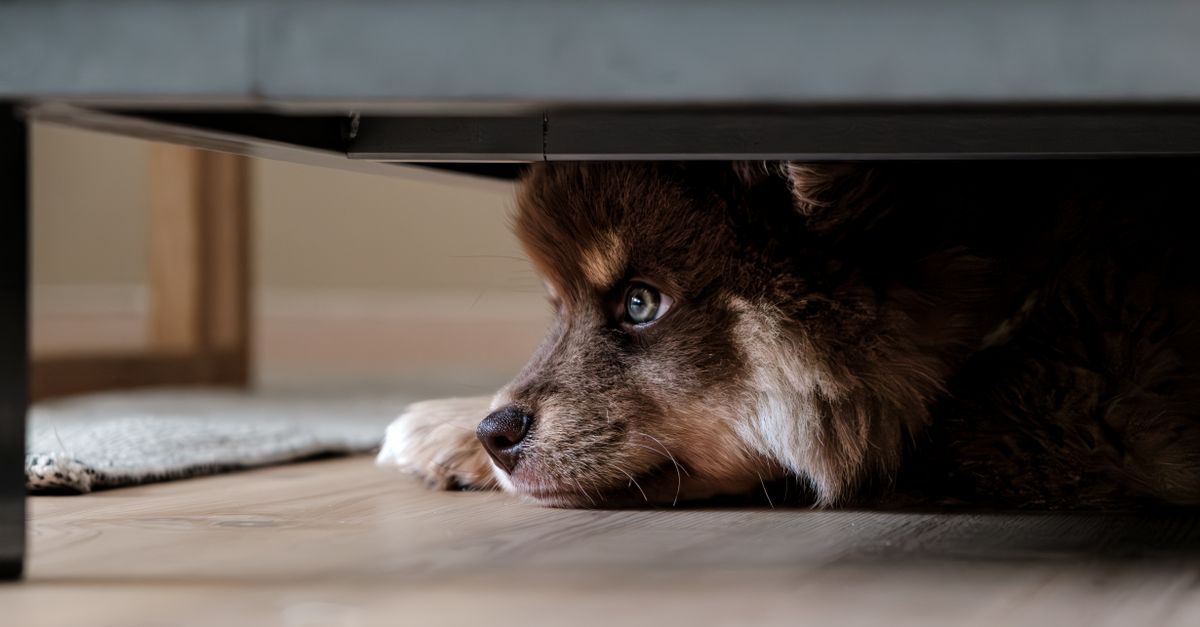
If your dog has moderate-to-severe anxiety, don’t leave them alone during peak fireworks hours. Panic in an empty house can lead to escape attempts or injury. If you absolutely can’t be home, ask a trusted friend or hire a pet sitter who can stay with your dog in the safe space you’ve set up.
Never bring an anxious dog to a fireworks event, even “just to try.” Exposure without the ability to escape makes phobias worse, not better.
Verify it worked
After the fireworks stop, watch how quickly your dog returns to baseline. Can they eat a treat within 30 minutes? Are they willing to move around the house normally within an hour or two? If yes, your approach likely worked for this level of anxiety.
If your dog is still panting heavily, hiding, or refusing food several hours after the noise has ended, that’s a sign the anxiety level is higher than your current tools can manage. Make a vet appointment well in advance for next time, or sooner if other noise triggers are coming up (thunderstorm season, New Year’s Eve).
Troubleshooting
Problem: Dog won’t go into the safe space you’ve set up
The room may feel like confinement rather than safety. Spend the next few weeks making it a positive space—feed meals there, offer high-value treats, let the dog nap there with the door open. Never force the dog in or close the door as punishment.
Problem: Anxiety wrap seems to make the dog more stressed
Some dogs don’t tolerate the pressure. Remove it. Try the environmental setup alone, or ask your vet about medication instead.
Problem: Dog tried to escape and is now missing
Contact local shelters immediately, post on neighborhood apps and lost-pet networks, and check with nearby veterinary clinics. Dogs frequently go missing during fireworks season. Microchip registration should be current—if it’s not, update it now.
Problem: You didn’t prep in advance and it’s the day before fireworks
Do what you can with environment: safe space, white noise, stay home. If your dog has a history of severe anxiety and you don’t have medication, call your vet anyway—some clinics keep a few emergency prescriptions available. It’s not ideal, but it’s better than nothing. Then mark your calendar to start desensitization weeks in advance for the next event.
When to call a professional
See your vet well in advance if:
- Your dog has panicked during past fireworks or shows anxiety around other loud noises
- You’re considering medication and need guidance on what’s appropriate for your dog’s health and anxiety level
- Your dog is on other medications and you want to confirm no interactions
Seek emergency care during the event if:
- Your dog has escaped and you can’t locate them
- Your dog is showing signs of injury from panic behavior (broken teeth, torn nails, lacerations from trying to break out of a crate)
- Your dog has difficulty breathing, collapses, or shows signs of heatstroke (excessive panting in a hot, enclosed space can be dangerous)
Long-term: If your dog’s noise anxiety is severe or affects multiple areas of life, ask for a referral to a certified animal behaviorist. Behavioral modification combined with medication is more effective than either alone, according to research from UC Davis School of Veterinary Medicine. Most noise phobias don’t resolve on their own, but they do respond to structured intervention.
FAQ
Can I comfort my dog during fireworks or does that make the anxiety worse?
You can and should comfort your dog. The idea that reassurance “reinforces fear” comes from outdated dominance theory and has no scientific backing. Providing calm, steady presence helps your dog feel safer. You’re not rewarding anxiety—you’re offering appropriate care during distress.
How far in advance should I start preparing?
For desensitization (gradual exposure to recorded fireworks sounds), start 4-6 weeks ahead. For setting up a safe space routine and scheduling a vet appointment if you need medication, aim for at least 2-3 weeks before the event. Last-minute prep is better than none, but earlier is always more effective.
Will my dog outgrow fireworks anxiety?
Unlikely. Noise phobia tends to stay the same or worsen without intervention, because each frightening event reinforces the learned fear response. The good news: with appropriate management—environmental setup, desensitization, and medication if needed—most dogs can improve significantly. It’s not about outgrowing it; it’s about giving the dog tools to cope.
Is it safe to use a crate during fireworks?
If your dog is already crate-trained and sees the crate as a safe den, yes. If the dog isn’t crate-trained or has a history of panic-injuring themselves trying to escape a crate, do not use one during fireworks. Use an open safe space instead (a small room with the door closed but the dog not confined to a crate inside it). A panicked dog can break teeth or tear nails on crate bars.
The dogs I’ve fostered who did best during fireworks weren’t the ones whose owners tried the most remedies at once. They were the ones whose owners accurately assessed the severity, started early, and escalated appropriately when mild tools weren’t enough. If this is your dog’s first fireworks event with you and you don’t yet know how they’ll react, prepare as if it’s moderate anxiety—safe space, white noise, stay home—and adjust based on what you learn. If you already know your dog struggles, don’t wait until the last minute to act. The weeks of prep aren’t optional for dogs with real phobia—that’s where the work that actually changes the outcome happens.
For dogs whose anxiety extends beyond fireworks into separation distress or general fearfulness, How to Treat Dog Separation Anxiety: A Step-by-Step Guide walks through longer-term behavior modification strategies. And if your dog’s baseline energy is high and they’re harder to settle even without fireworks, Indoor Dog Exercise Ideas for Apartments That Actually Work has practical tired-out tactics that can lower arousal before the evening starts.