

The 5 AM yowl. The pre-dawn pounce on your chest. The rhythmic batting of your face with a soft paw that will become less soft if you don’t respond. If your cat wakes you up too early every morning, you’re not dealing with a malicious creature—you’re dealing with a small predator whose internal clock says it’s hunting time, and you’re the only moving thing in the apartment.
This guide shows how to stop your cat from waking you up at night by working with feline biology instead of against it. You’ll learn why cats are most active at dawn and dusk, how to redirect that energy into appropriate outlets, and when nighttime meowing signals a health problem rather than a behavioral one. The strategies differ depending on whether you’re managing a kitten, an adult cat, or a senior—each age group has different needs and responds to different interventions. Most owners see improvement within two to three weeks of consistent effort.
What you need to understand first
Before you try to fix the behavior, you need to understand what you’re working with. Cats aren’t nocturnal—they’re crepuscular, meaning they’re hardwired to be most active at dawn and dusk. This inherited prey-drive behavior comes from wild ancestors who hunted in low light when small mammals were active. Your indoor cat doesn’t need to hunt, but the biological clock remains.
When your cat wakes you at 5 AM, she’s not being spiteful—she’s responding to an internal surge of energy that, in a natural environment, would be directed toward stalking, pouncing, and eating. The problem isn’t the wake-up call itself. It’s that indoor cats lack the enrichment outlets that would naturally tire them during those activity peaks, so they redirect all that energy to the nearest responsive mammal: you.
International Cat Care documents feline activity rhythms and confirms that crepuscular patterns are normal biological behavior, not pathological. Understanding this rhythm is the first step toward redirecting it.
What you’ll need
For enrichment:
- Interactive toys (wand toys, feather chasers, or laser pointer)
- Puzzle feeders or treat-dispensing balls ($10–$25)
- Vertical climbing furniture or cat tree (if you don’t already have one)
- Cardboard boxes or paper bags for low-cost enrichment
For schedule restructuring:
- Set feeding times (if you currently free-feed)
- Alarm or phone reminder for consistent play sessions
Optional environmental aids:
- White noise machine or app ($0–$30)
- Blackout curtains (if your bedroom gets early light)
- Feliway or similar feline pheromone diffuser ($25–$40, optional for anxious cats)
Prerequisites:
- Vet clearance to rule out medical causes (see next section)
- Willingness to be consistent for 2–3 weeks
- Acceptance that you can’t eliminate the crepuscular pattern—only redirect it
Before you start: rule out health issues
Not all nighttime waking is behavioral. If your cat’s nighttime meowing or activity is a recent change, happens multiple times per hour, or sounds distressed (yowling rather than normal meowing), see a vet before assuming this is behavioral.
Medical conditions that commonly cause nighttime waking include:
- Hyperthyroidism (especially in senior cats)—causes hyperactivity, increased vocalization, and appetite changes
- Cognitive dysfunction in cats over 10—confusion about day/night cycles, disorientation, increased vocalization
- Urinary tract issues—pain or urgency that wakes the cat and prompts distressed vocalization
- Chronic pain—arthritis or dental disease that becomes more noticeable when the cat is trying to settle
What to request from your vet: Don’t just say “my cat meows at night”—request specific diagnostics. Ask for a TSH/T4 thyroid panel, complete blood count (CBC), chemistry panel, and urinalysis. These tests rule out hyperthyroidism, urinary tract infections, and kidney disease, the three most common medical causes of nighttime waking behavior. The American Veterinary Medical Association provides resources on senior cat health screening that your vet can reference.
If your cat is over 10 years old, has had any appetite, weight, or litter box changes alongside the nighttime behavior, or if the meowing sounds different than it used to, start with a vet visit. Cats can’t tell you they’re in pain; excessive vocalization is one of the few ways they communicate distress.
Age matters: tailoring your approach
A six-month-old kitten, a healthy three-year-old adult, and a twelve-year-old senior cat all wake you at dawn—but they need different interventions.
Kittens (under 1 year): Young cats have boundless energy and haven’t yet learned human schedules. They benefit most from extremely high-intensity play sessions (two 15-minute sessions daily), environmental complexity, and—if you’re considering it—a similarly-aged companion. A second kitten can redirect nighttime energy away from you, though the introduction process has its own challenges (see How to Introduce Two Cats: A Step-by-Step Timeline).
Adult cats (1–10 years): The standard protocol in this guide works best for healthy adults. Focus on scheduled feeding, pre-bedtime play, environmental enrichment, and extinction of learned attention-seeking behavior.
Senior cats (10+ years): Older cats with cognitive dysfunction syndrome need environmental consistency more than novelty—keep food, litter, and sleeping areas in the same location. Don’t rearrange furniture. If diagnostic tests are clear but nighttime vocalization persists, discuss anti-anxiety medication or supplements with your vet. Pharmaceutical intervention is sometimes the most humane option for cognitive decline. Senior cats may also need nightlights to reduce disorientation if vision is declining.
The rest of this guide focuses on the adult-cat protocol, with notes where senior or kitten strategies differ.
Step 1: Restructure feeding to align with natural rhythms
Move to two scheduled meals per day if you currently free-feed. Feed once in the morning (after you wake up, not when the cat demands it) and once in the evening, ideally 30–60 minutes before your bedtime.
Why this works: Feeding at dusk mimics the natural hunt → eat → groom → sleep cycle. A cat who eats a full meal in the evening is more likely to settle into a post-meal grooming-and-sleep routine rather than prowling for stimulation at 4 AM. This also prevents your cat from associating you with food access during early-morning hours.
For kittens: You may need three meals daily due to higher metabolic needs. The evening meal is still the most important for encouraging nighttime settling.
For seniors: Older cats with kidney disease or hyperthyroidism may need prescription diets or more frequent smaller meals—follow your vet’s guidance but try to keep the largest meal in the evening.
What success looks like: Within the first week, your cat should stop waking you specifically to demand breakfast. The early-morning energy will still be there, but it won’t be food-driven.
Step 2: Schedule high-intensity play during crepuscular peaks
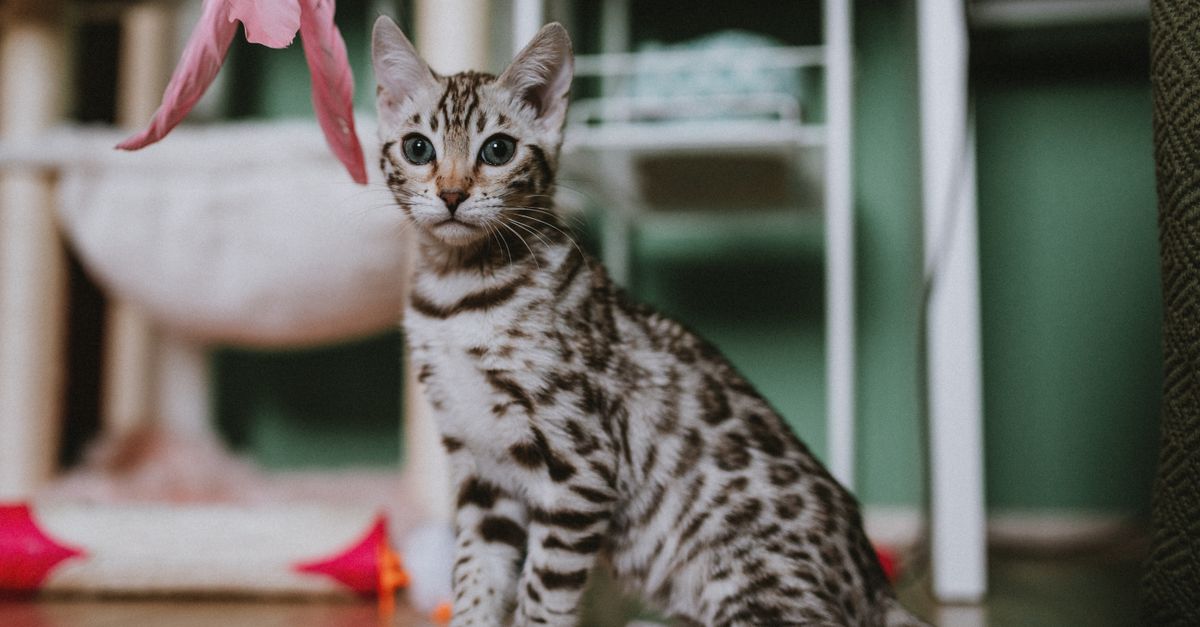
Play with your cat for 10–15 minutes right before your bedtime using interactive toys that mimic prey. Wand toys, feather chasers, or even a wadded-up piece of paper work if you make the “prey” move erratically—darting, stopping, hiding behind furniture.
The key: This isn’t lazy waving of a toy. You’re simulating a hunt that ends in fatigue. Fast movements, rapid direction changes, vertical leaps if your cat will climb. The goal is heavy breathing and sprawled-out flopping at the end. Follow the play session with the evening meal.
If you can manage it, a second 5–10 minute play session right when you wake up (before the cat starts pestering you) helps burn off that dawn energy surge.
For kittens: Increase to 15–20 minute sessions. Young cats have more stamina; you’re trying to hit genuine physical fatigue.
For seniors: Shorter, gentler sessions may be necessary if arthritis limits jumping. Focus on ground-level stalking movements rather than vertical leaps. Even five minutes of engaged play helps.
What success looks like: Your cat should be visibly tired after play—panting lightly, lying flat, less interested in the toy. If she’s still zooming around after 15 minutes, you’re not playing hard enough.
Step 3: Provide 24/7 enrichment for solo activity
Cats need stimulation even when you’re asleep. Rotate the following daily so nothing becomes boring:
- Puzzle feeders with a few kibbles or treats hidden inside
- Cardboard boxes with holes cut for paw-fishing
- Window perches positioned for “bird TV” during dawn hours (especially effective for adult and senior cats)
- Vertical climbing spaces—cat trees, wall shelves, or even a cleared bookshelf
- Paper bags, crinkle balls, or solo-play toys left in different rooms
The goal is to give your cat something to do with that 5 AM energy other than waking you. One of my cats will spend 20 minutes at dawn batting a single wine cork around the kitchen if I leave it out the night before. It’s not elaborate, but it redirects the energy.
For kittens: Increase novelty and complexity. Rotate toys more frequently. Leave a few “hunting” toys—small stuffed mice, balls with bells—in different locations each night.
For seniors: Maintain environmental consistency. Familiar toys in familiar locations reduce anxiety. If cognitive dysfunction is suspected, don’t rearrange the enrichment setup daily.
Step 4: Manage the sleep environment
If your cat is still waking you despite enrichment and feeding changes, close the bedroom door for 1–2 weeks while the new routine takes hold. This forces consistency—you can’t accidentally reinforce meowing by responding half-asleep.
Additional environmental tweaks:
- Blackout curtains reduce early light that can trigger the crepuscular response.
- White noise or a fan buffers outdoor dawn sounds (birds, garbage trucks) that wake your cat, who then wakes you.
- Nightlights in hallways help senior cats with declining vision navigate without becoming disoriented and vocalizing in confusion.
Step 5: Never reward nighttime attention-seeking (and expect the extinction burst)

If your cat meows, pounces, or paws at you during the night, do not respond. Don’t pet her, don’t talk to her, don’t even make eye contact. Any reaction—including yelling or pushing her away—is attention, and attention reinforces the behavior.
Here’s what you need to know about the extinction burst: When you stop rewarding a previously reinforced behavior, your cat will escalate the behavior for approximately 3–7 days before it improves. This is called an extinction burst, and it’s a normal psychological phenomenon. Your cat has learned that meowing gets a response; when that response stops, she tests whether louder, more persistent, or more creative meowing will work. The behavior will temporarily get worse—longer meowing sessions, pawing at your face, knocking things off the nightstand—before it gets better.
This escalation does not mean the strategy is failing. It means it’s working. The cat is testing the boundaries of the new rule. If you give in even once during the extinction burst—at 3 AM on night five when you’re exhausted and just want her to stop—you’ve taught her that extremely persistent meowing works, and you’ll be back at square one with a more entrenched behavior.
Expect the worst nights to be nights 3–5. Use earplugs, white noise, or sleep in a different room temporarily if you need to, but do not respond.
Why punishment doesn’t work: Water sprays, loud noises, or yelling don’t teach a cat to stop meowing at night. Cats don’t connect punishment to their behavior; they connect it to you. You’ll damage trust and the behavior will continue, just more quietly (silent pouncing instead of audible meowing). The ASPCA recommends positive reinforcement and environmental management over aversive techniques for feline behavior modification.
The only way to stop cat meowing at night that was learned through reinforcement is to stop reinforcing it. Ignore completely, every time, for at least two weeks.
Verify it worked
After 2–3 weeks of consistent feeding schedule, play sessions, and environmental enrichment, you should notice:
- Your cat no longer wakes you by meowing or pawing at your face.
- She may still be active at dawn, but the activity is directed toward toys, climbing, or window-watching rather than you.
- You’re waking naturally to your alarm instead of to a cat.
If you’re still being woken after three weeks of strict consistency, revisit the vet to rule out medical causes.
Troubleshooting
Problem: My cat meows at the closed bedroom door for hours.
This is the extinction burst. She’s testing whether the old strategy (meow = human appears) still works. If you give in even once, you reset the clock and start the 3–7 day escalation period over. Use earplugs or white noise and wait it out. Most cats quit after 5–7 nights. The loudest nights are usually nights 3–5.
Problem: My cat is quiet at night but wakes me up at 4 AM on the dot.
She’s responding to early light or outdoor sounds. Add blackout curtains and a white noise machine. Also confirm you’re not accidentally reinforcing the 4 AM wake-up by feeding her shortly after—if breakfast happens at 4:15, she’ll keep waking you at 4:00. Move breakfast to at least 30 minutes after your actual wake time.
Problem: I did everything right and my cat is worse, or my senior cat seems confused at night.
See a vet. Increased nighttime vocalization, especially if it sounds distressed, can indicate hyperthyroidism, cognitive dysfunction, or pain. For senior cats showing disorientation, confusion, or excessive nighttime yowling even after medical tests are clear, ask your vet about anti-anxiety medication or supplements formulated for cognitive support. Pharmaceutical intervention is sometimes the most humane solution for age-related cognitive changes.
Problem: My kitten has endless energy no matter how much I play.
Consider a second kitten if your living situation allows. Two similarly-aged kittens will wrestle, chase, and tire each other out in ways that solo play with a human can’t replicate. See more on how to introduce two cats: a step-by-step timeline for the introduction process—done correctly, it reduces nighttime behavior issues rather than doubling them.
When to call a veterinarian
Consult a vet if:
- Your cat’s nighttime behavior is a recent change (wasn’t happening six months ago).
- She meows excessively—multiple times per hour—even after three weeks of enrichment and schedule changes.
- The meowing sounds distressed or unusual (yowling, not her normal meow).
- You’ve noticed appetite changes, weight loss, increased thirst, or litter box issues alongside the nighttime waking.
- Your cat is over 10 years old (cognitive dysfunction and hyperthyroidism become more common).
Request specific diagnostics: TSH/T4 thyroid panel, complete blood count, chemistry panel, and urinalysis. These tests efficiently rule out the most common medical causes. Excessive vocalization is a red flag; address it medically before assuming it’s purely behavioral.
FAQ
Why does my cat wake me up at 5 AM but not my partner?
Cats learn who responds. If you’ve historically been the one to get up, feed, or acknowledge the cat during early-morning wake-ups, she’s learned you’re the effective target. Consistency from both humans helps break the pattern. Also see Why Does My Cat Bite Me? Understanding Feline Biting Behavior for more on how cats learn which behaviors get results from specific people.
Will getting a second cat solve the problem?
Sometimes, but not reliably. Two cats may entertain each other during dawn hours—this works best with young, similarly-aged cats or kittens. Two seniors or one adult with one kitten may not entertain each other effectively, or they may wake each other up and escalate the chaos. If you’re considering a second cat primarily to solve nighttime behavior, read our take on this first—the introduction process is its own challenge and requires separate preparation.
Can I train my cat to sleep through the night like a dog?
No. You can’t erase the crepuscular activity pattern—it’s genetic. What you can do is redirect that energy so it’s not aimed at you. Think of it as training yourself to provide better outlets, not training the cat to become a different species. Even after successful intervention, your cat will still be most active at dawn and dusk; she’ll just be active in ways that don’t involve waking you.
How long does it take to keep cat quiet at night?
Most owners see meaningful improvement within 2–3 weeks of consistent feeding schedule, play routine, and environmental enrichment. Expect an extinction burst (3–7 days of escalated behavior) during the first week if you’re breaking an existing attention-seeking habit. If you’re inconsistent—playing with her at dawn sometimes, ignoring her other times—it will take much longer or fail entirely. Consistency is non-negotiable.
My senior cat just started yowling at night. Is this behavioral?
Probably not. New nighttime vocalization in senior cats is frequently medical—hyperthyroidism, cognitive dysfunction, pain, or declining vision causing disorientation. See a vet first, request the diagnostic panel (TSH/T4, CBC, chemistry, urinalysis), and discuss cognitive support options if tests are clear but behavior persists.
Your cat isn’t waking you out of malice. She’s waking you because her brain says it’s time to hunt, and you’re the most interesting thing moving. Give her better outlets for that energy, stop accidentally rewarding the behavior, and be consistent for a few weeks. Expect the extinction burst—those 3–7 days when the behavior gets worse—and don’t give in. For related behavioral challenges, see Why Does My Cat Knead Me? The Real Reasons Behind the Behavior to understand other common feline communication patterns.