

Your cat’s nails click across the hardwood, catch on the blanket, and left small scratches on your arm this morning—but the second you pull out clippers, she vanishes under the bed. This is the actual problem most cat owners face: not the mechanics of cutting cat claws, but managing a cat who wants nothing to do with the process.
Indoor cats need nail trims every 2–4 weeks because they don’t wear their nails down naturally on carpet and wood floors the way outdoor cats do on pavement and tree bark. Left unchecked, overgrown nails curve back into the paw pad, causing pain, limping, and infection. Long nails also snag and tear, which is more painful than any trim.
This isn’t declawing. Declawing is surgical amputation of the last bone of each toe—the equivalent of removing a human finger at the last knuckle. The American Veterinary Medical Association calls it a major surgery with permanent effects on gait and pain. Trimming is maintenance. It removes the sharp tip, leaves the nail intact, and when done correctly, doesn’t hurt.
Choosing the right tool
Most articles list three clipper types without helping you decide. Here’s the decision tree:
| Tool Type | Best For | Pros | Cons | Price Range |
|---|---|---|---|---|
| Scissor-style clippers | First-timers, anxious cats | Familiar grip, precise control, quiet | Requires hand strength | $8–$15 |
| Guillotine-style clippers | Cats with thick nails, confident trimmers | Clean cut, less splintering | Hard to see cutting line, can crush if dull | $6–$12 |
| Electric grinder | Cats tolerant of noise, owners wanting ultra-smooth edges | No risk of cutting quick, smooth finish | Loud, vibration scares most cats, slow | $20–$40 |
Start with scissor-style clippers. They look like small scissors with a notch in each blade and give you the best sightline to the quick. Never use human nail clippers—they crush cat nails instead of cutting cleanly, causing splintering and pain.
What you’ll need
Tools:
- Scissor-style or guillotine cat nail clippers
- Styptic powder or cornstarch (in case of bleeding)
- Towel (for gentle restraint if needed)
Supplies:
- High-value treats (squeeze-tube treats work well for mid-trim rewards)
- Good lighting (phone flashlight works)
Prerequisites:
- A cat who tolerates being touched on the paws—even briefly. If your cat has never let you hold her paw, you’ll need desensitization first (see Troubleshooting).
Before you start
Find the quick before you cut. Gently press the pad to extend the nail. The quick is the pink blood vessel and nerve running through the center of the nail. On light-colored nails it’s visible; on dark nails you’ll see a solid dark core. The goal is to trim only the clear or white hooked tip, staying 2–3 millimeters away from the quick.
Trim in a quiet room with no other pets or distractions. Cats pick up on your stress, so if you’re tense, they will be too. If your cat has arthritis, limps, or shows any signs of paw pain, check with your vet before attempting trims at home—paw handling can be painful for cats with joint issues. If you’re genuinely anxious about the process yourself, it’s okay to have a vet or groomer do the first trim while you watch.
Step 1: Position and hold
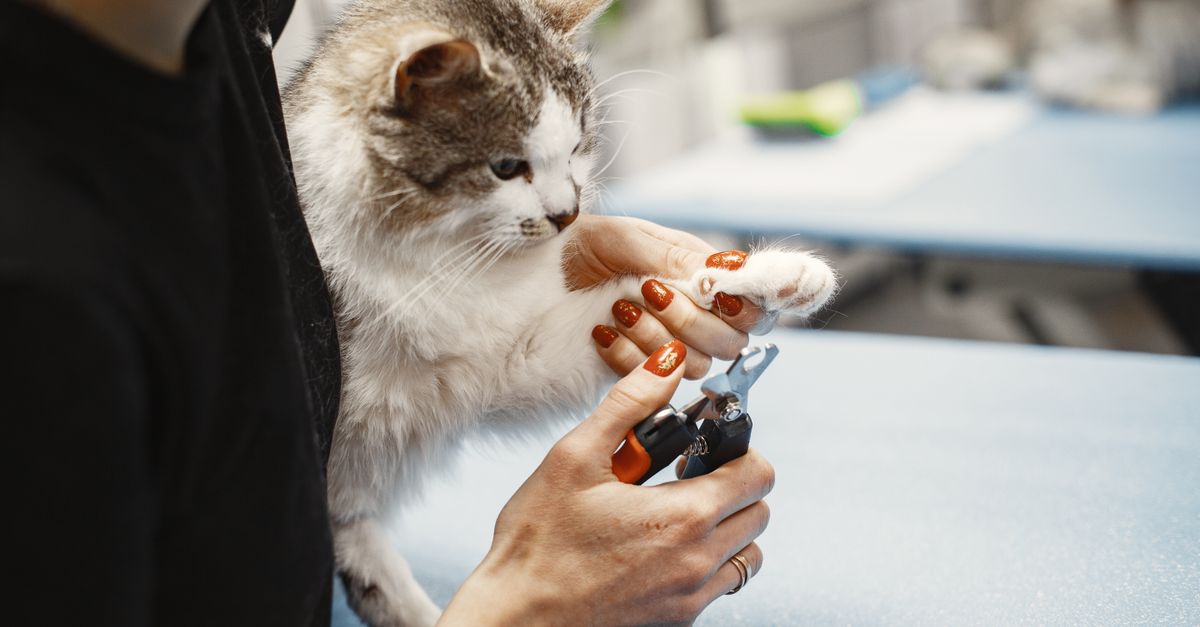
Sit with your cat in your lap, facing away from you, or on a table at chest height. Hold one paw gently but firmly—loose enough that she doesn’t panic, firm enough that she can’t yank it back mid-cut. Press the pad to extend the nail fully.
If your cat struggles, wrap her loosely in a towel with just one paw sticking out. This is not cruel; many cats calm down when gently swaddled because it limits their options without pain.
Step 2: Trim the tip
Position the clippers perpendicular to the nail, not at an angle. Trim just the sharp, curved tip—the clear hook past the quick. You’ll hear a clean snip. If the nail splinters or crushes, your clippers are dull or you’re using the wrong type.
Trim one nail, release the paw, give a treat. Then move to the next nail. Trying to power through all four paws in one session is how you end up with a cat who hides for three days.
Step 3: Check your work

The trimmed nail should have a clean, flat edge with no jagged bits. If you see a small black dot in the center of the cut surface, you’re close to the quick—don’t go shorter. If the nail bleeds, you’ve hit the quick. Stay calm. Press styptic powder or cornstarch into the nail tip and hold pressure for 5–10 minutes. The bleeding will stop. Your cat will forgive you, though not immediately.
Step 4: Repeat (or stop)
If your cat is calm, continue with the other nails on that paw, then move to the next paw. If she’s escalating—ears back, tail lashing, growling—stop. You can finish the other paws tomorrow. A half-finished trim is better than a cat who now associates you with being forcibly restrained.
Most cats tolerate front paws better than back paws. Do front paws first when she’s calmest.
Troubleshooting common problems
My cat won’t let me touch her paws. Start desensitization two weeks before you attempt a trim. Spend 30 seconds a day touching her paws while she’s relaxed—during petting, while she’s eating, right after she wakes up. Reward with treats. Gradually progress to holding a paw for five seconds, then pressing the pad to extend the nails, then touching the clippers to the nail without cutting. This works, but it’s slow. If you need nails trimmed now, see a groomer.
She’s fine for two nails, then loses it. That’s her threshold. Trim two nails per session, once a day, and you’ll finish all four paws in a week. It’s slower but sustainable. Forcing past her threshold teaches her that nail trims are something to escape, and next time she’ll fight from nail one.
I tried the two-person method and it made things worse. Two-person trims work when one person is calm and competent at restraint. If the holder is nervous or gripping too hard, the cat panics faster. The International Society of Feline Medicine notes that improper restraint is a top trigger for fear-based aggression during grooming. If your cat is aggressive or terrified, a professional groomer or vet trained in low-stress handling is safer for everyone.
The nails look fine but she’s limping after a trim. You may have trimmed too short and hit the quick, or she has underlying arthritis that makes paw handling painful. Check for bleeding or swelling. If she’s still limping after 24 hours, call your vet.
When to call a professional
- Bleeding that doesn’t stop after 10 minutes of pressure with styptic powder or cornstarch.
- Cats who bite, scratch, or show intense fear during restraint. Groomers and vet techs are trained in safe handling; many clinics offer nail-trim-only appointments for $10–25.
- Senior cats (10+ years) or cats with arthritis. Paw handling can be painful for cats with joint issues. Talk to your vet before attempting trims at home.
- Nails that are thick, brittle, discolored, or don’t respond to trimming. These can signal fungal infection or metabolic issues and need veterinary evaluation.
Some cats will never tolerate at-home nail trims, and that’s not a failure on your part. A $15 groomer visit every three weeks is cheaper than the stress of forcing a terrified cat into a towel burrito every month. Similar to How to Give a Cat a Pill (Without the Drama) or Can You Bathe a Cat? When It’s Needed and How to Do It Safely, some care tasks are worth outsourcing when the cat’s stress outweighs the convenience.
FAQ
How often should I trim my cat’s nails?
Indoor cats typically need trims every 2–4 weeks, according to the ASPCA’s cat care guidelines. Outdoor cats wear their nails naturally but may still need occasional trims if nails curve or snag. Check nails weekly—if they’re clicking on hard floors or catching on fabric, it’s time.
Can I trim my cat’s nails if they’re black?
Yes, but trim conservatively. You won’t see the pink quick through dark nails, so take off only the sharp hook tip—1–2 millimeters at a time. If you see a dark solid core when you look at the cut surface, stop. That’s the quick.
What if I accidentally cut the quick?
Apply styptic powder or cornstarch to the nail and hold pressure for 5–10 minutes. The bleeding will stop. It’s painful for your cat but not dangerous unless bleeding continues past 10 minutes or you see signs of infection (swelling, discharge, redness) in the following days. If either happens, call your vet.
Nail trims are one of those care tasks where the internet makes it sound easier than it is. The mechanics are simple; the cat’s cooperation is not. If your cat tolerates paw handling and you can keep sessions short and positive, at-home trims work. If she’s fractious or you’re anxious, a professional every few weeks is a reasonable plan. The goal is healthy nails without trauma for either of you.