

You notice your cat sitting hunched by the food bowl, drooling slightly, swallowing hard every few seconds. She won’t eat. She’s nauseous — and if the underlying cause is chronic kidney disease or pancreatitis, this won’t resolve on its own. That’s where cat anti-nausea medicine comes in.
The short answer
Veterinarians primarily prescribe maropitant (Cerenia) for nausea in cats, followed by mirtazapine when appetite loss accompanies nausea, and ondansetron for chemotherapy-induced nausea or refractory cases. Metoclopramide, once common, is now considered largely ineffective in cats.
Why cats get nauseous matters more than the medication
Nausea is a symptom, not a diagnosis. The same cat hunched by the food bowl could have kidney disease, pancreatitis, hairball obstruction, or post-anesthesia recovery nausea. The medication your vet chooses depends on what’s causing the nausea and what else needs to happen alongside it.
The most common underlying causes in cats:
Chronic kidney disease (CKD) — The leading reason cats receive long-term antiemetics. As kidney function declines, waste products build up in the bloodstream (uremia), triggering nausea. Managing nausea improves appetite and quality of life, which can slow disease progression. Cornell’s Feline Health Center identifies nausea as one of the earliest uremia symptoms.
Pancreatitis — Inflammation of the pancreas causes acute or chronic nausea. Antiemetics are part of broader management that includes dietary changes and sometimes pain medication.
Gastrointestinal disorders — Hairballs, inflammatory bowel disease, gastritis. If your cat is vomiting repeatedly, imaging may be needed to rule out obstruction.
Post-operative recovery — Especially after anesthesia and abdominal surgery.
Chemotherapy — For cats undergoing cancer treatment.
Modern veterinary practice has shifted toward receptor-specific medications that target the brain regions controlling nausea, rather than older prokinetic drugs that attempt to speed up stomach emptying.
The primary antiemetics: how they work and when they’re used
| Medication | How It Works | Typical Use | Cost/Month |
|---|---|---|---|
| Maropitant (Cerenia) | Blocks NK-1 receptors in the brain’s nausea center | First-line for most feline nausea, especially CKD | $15–40 per injection |
| Mirtazapine | Antidepressant with appetite-stimulating and antiemetic effects | Nausea + appetite loss (CKD, pancreatitis) | $5–15 |
| Ondansetron (Zofran) | Blocks 5-HT3 serotonin receptors | Chemotherapy nausea, refractory cases | $30–80 |
| Metoclopramide | Dopamine antagonist (outdated for cats) | Rarely recommended | $3–8 |
| Famotidine (Pepcid) | Reduces stomach acid | Adjunctive therapy, not primary antiemetic | $2–5 |
Maropitant (Cerenia): the current standard
Maropitant blocks neurokinin-1 receptors in the chemoreceptor trigger zone, one of the brain regions that controls vomiting. It’s the first medication most vets reach for when treating feline nausea.
Typically given as a subcutaneous injection at 1 mg/kg once daily for 2–5 days, though long-term use is common in cats with chronic kidney disease. In clinical practice, most cats show clear improvement in nausea and appetite within days of starting treatment.
It’s well-tolerated. Side effects are minimal — occasional mild injection-site reactions. I’ve watched a vet administer it to a 16-year-old cat with advanced CKD who was back to demanding breakfast within 48 hours.
Mirtazapine: when appetite loss is part of the problem
Mirtazapine is a tricyclic antidepressant that also acts as an appetite stimulant. Its antiemetic properties work through central nervous system effects, and the dual benefit makes it valuable when nausea and appetite loss appear together.
Dosed at 1.88–7.5 mg per cat once or twice daily (oral tablet or compounded liquid), appetite stimulation often appears within 24–48 hours. The antiemetic effect is secondary but real.
Common side effect: sedation, usually temporary. Some cats become noticeably sleepy for the first few days, then adjust. Monitor weight gain if using long-term — increased appetite is the goal, but you don’t want a cat who was already overweight gaining more.
Ondansetron (Zofran): the chemotherapy and refractory-nausea option
Ondansetron blocks 5-HT3 serotonin receptors in the chemoreceptor trigger zone. It’s proven effective in humans and other species; feline-specific studies are limited, but clinical efficacy is strong. Vets typically use it for chemotherapy-induced nausea or when maropitant hasn’t worked.
Dosed at 0.1–0.5 mg/kg once or twice daily (oral or injectable), it’s generally well-tolerated. The main drawback is cost — $30–80 per month depending on formulation.
The metoclopramide problem
Metoclopramide is a dopamine antagonist intended to enhance gastric motility. In dogs and humans, it works reasonably well. In cats, it doesn’t.
Cats lack the dopamine receptors that make this drug effective in other species. Veterinary experience and literature confirm limited efficacy in cats, yet some vets still prescribe it — either out of habit or because it’s inexpensive.
If your cat was prescribed metoclopramide and didn’t improve, that’s not surprising. Ask your vet about switching to maropitant.
Which medication for which situation
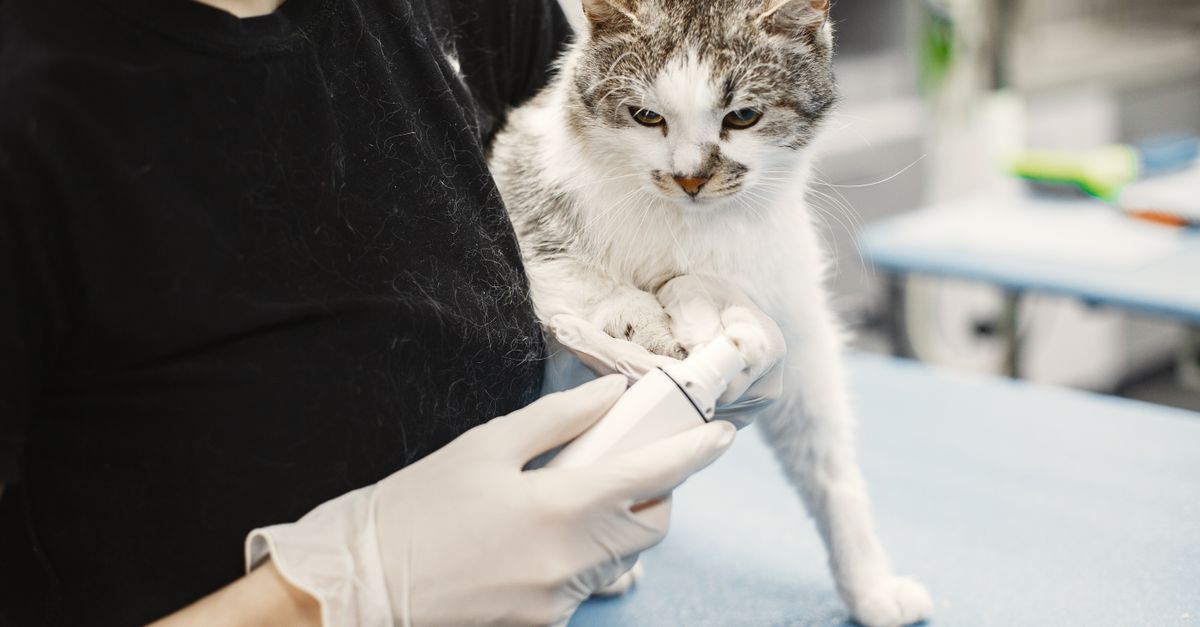
Your vet’s choice depends on the underlying condition and what else the cat needs.
Cat with CKD and good appetite but intermittent nausea: Maropitant injections, often given every few days or weekly as needed.
Cat with CKD who won’t eat: Mirtazapine for dual appetite stimulation and nausea control. Sometimes both maropitant and mirtazapine are used together.
Cat recovering from surgery: Short course of maropitant (2–5 days).
Cat undergoing chemotherapy: Ondansetron before and after treatment sessions.
Cat with pancreatitis: Maropitant + dietary management (low-fat food). If appetite is poor, add mirtazapine.
Cat with hairball-related nausea: Address the root cause (diet, grooming, fiber supplements) rather than long-term antiemetics. If vomiting persists, imaging is needed to rule out obstruction or inflammatory bowel disease.
What your vet will do before prescribing
A responsible vet won’t hand you antiemetics without diagnostics. Expect:
- Physical examination — palpating the abdomen, checking hydration, assessing overall condition
- Bloodwork — complete blood count and chemistry panel to rule out kidney disease, pancreatitis, infection, electrolyte imbalance
- Urinalysis — further kidney function assessment
- Imaging — ultrasound or X-rays if vomiting persists despite normal bloodwork, to rule out tumors, obstruction, or pancreatic inflammation
The goal is to diagnose the underlying cause. Antiemetics treat the symptom; the disease still needs management.
Safety and long-term use
Maropitant is safe in cats of all ages, including kittens and geriatric cats. Long-term use in CKD is expected and well-tolerated. Monitor for injection-site swelling, though it’s rare.
Mirtazapine should be used cautiously in very elderly or hyperthyroid cats — rare cases of hyperthermia have been reported. The appetite-stimulating effect means you’ll need to monitor weight gain.
Ondansetron is safe in cats; constipation is possible but uncommon.
Never self-treat. All of these medications require a prescription and an underlying diagnosis. A nauseous cat needs diagnostics, not just symptom management.
When to see a vet immediately
- Vomiting more than once or twice per week over two or more weeks
- Vomiting accompanied by lethargy, weight loss, or complete appetite loss
- Suspected foreign body ingestion (string, toy parts, hair ties)
- Vomiting plus diarrhea, abdominal pain, or fever
FAQ
Can I give my cat human anti-nausea medication?
No. Drugs like Dramamine or Pepto-Bismol are not safe for cats. Ondansetron is technically a human medication, but dosing and formulation must be vet-prescribed — never use a human dose.
How long does it take for anti-nausea medication to work in cats?
Maropitant often shows improvement within 24–48 hours. Mirtazapine’s appetite-stimulating effect can appear within a day, but full antiemetic benefit may take several days. If no improvement after five days, contact your vet.
Will my cat need anti-nausea medication forever?
It depends on the underlying condition. Cats with chronic kidney disease may need long-term or intermittent antiemetic therapy. Cats recovering from surgery or a hairball episode may only need a short course. Your vet will guide the timeline based on bloodwork and symptom response.
Anti-nausea medication doesn’t fix the disease — it buys your cat comfort and appetite while the underlying condition is managed. The best medication is the one prescribed after your vet has figured out why your cat is nauseous in the first place.