

The image is everywhere: a single goldfish circling a round glass bowl, maybe with a plastic castle and colored gravel. Pet stores still sell the setup. Cartoons still show it. And goldfish kept this way still die within a year or two, while their owners assume that’s just how long goldfish live.
It isn’t. A goldfish in a proper tank lives ten to fifteen years. The bowl is the problem.
The short answer
A single goldfish needs a minimum of 20 gallons of filtered, cycled water. Add 10 gallons for each additional fish. Bowls — even large ones — lack the water volume, filtration, and surface area goldfish require to process their waste and stay healthy. The “goldfish bowl” is a welfare failure, not a tradition worth keeping.
Why goldfish can’t live in bowls
Goldfish produce waste at roughly two to three times the rate of similarly sized tropical fish. This isn’t because they’re dirty — it’s their biology. As bottom-feeders with fast metabolisms, they generate ammonia constantly through respiration and waste. That ammonia is toxic. In a properly filtered and cycled tank, beneficial bacteria convert ammonia into less harmful compounds. In a bowl, ammonia builds to dangerous levels within 48 to 72 hours, even if you’re doing daily water changes.
Ammonia burns gills. It stresses the immune system. It opens the door to bacterial infections. A goldfish in a bowl isn’t thriving quietly — it’s in chronic distress, and that’s why it dies young.
The ASPCA’s goldfish care guidelines are clear: 20 gallons minimum for the first fish, and that’s not negotiable. Larger water volume means slower ammonia accumulation and more stable water chemistry. It’s the difference between a livable environment and a slow poisoning.
The stunting myth — and why it’s worse than you think
You’ve probably heard that goldfish “grow to the size of their tank.” It sounds almost adaptive, like the fish is smart enough to match its environment. It’s not. What’s actually happening is called stunting, and it’s a stress response, not a survival strategy.
When goldfish are confined to small spaces, their bodies release growth-inhibiting hormones. They stay small because their endocrine system is suppressing normal development. Research indicates that goldfish raised in undersized tanks experience stunting as a chronic stress response, and these effects persist even if the fish is moved to a larger tank later. The fish never fully recovers its growth trajectory or returns to full health.
Stunting isn’t the fish adapting. It’s the fish breaking. And it’s largely irreversible.
If you buy a goldfish and keep it in a bowl for six months, then upgrade to a 40-gallon tank, you haven’t fixed the problem. You’ve limited the damage, but the harm is already done. Tank size is a decision you make at setup, not something you can course-correct later without consequences.
How big should a goldfish tank actually be
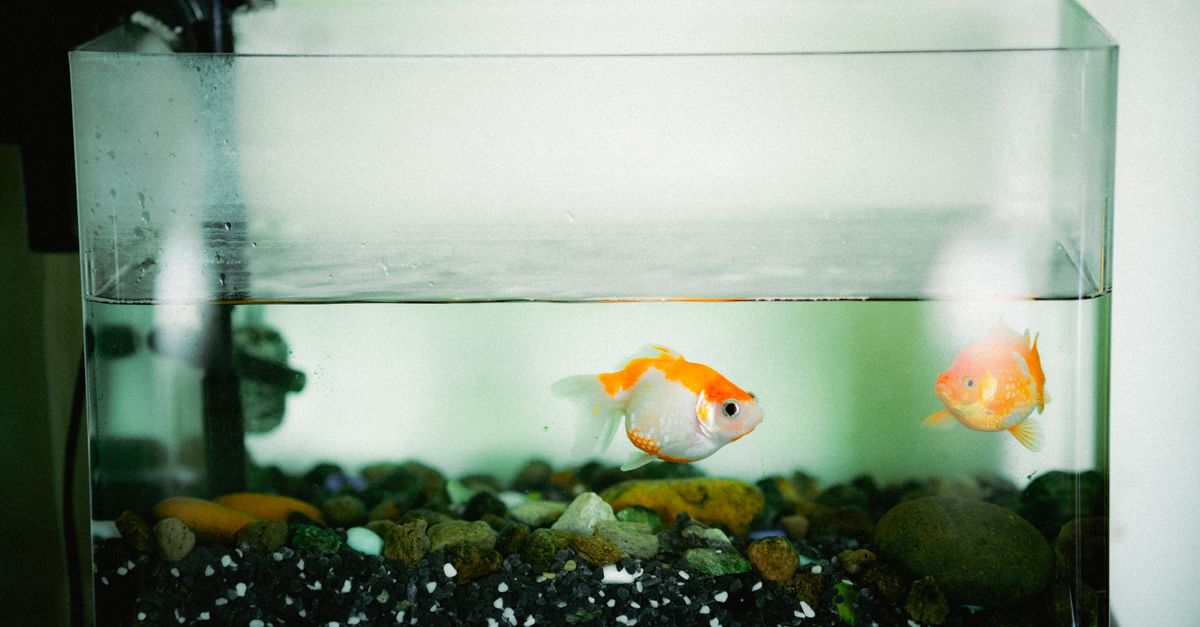
Start with 20 gallons for one goldfish. If you’re keeping common goldfish (the long-bodied, single-tail variety), plan for even more space as they grow — these fish can reach eight to ten inches in a proper setup. Fancy goldfish (the rounder, double-tailed types like orandas and fantails) stay smaller but produce just as much waste, so the 20-gallon baseline still applies.
For every additional goldfish, add 10 gallons. Two goldfish need 30 gallons minimum. Three need 40. This isn’t about giving them “luxury” — it’s about keeping the water chemistry stable enough that the fish aren’t slowly poisoned by their own waste.
Filtration matters just as much as tank size. Goldfish need a filter rated for at least double the tank’s volume. A 30-gallon tank should have a filter rated for 60 gallons. Goldfish are messy, and an undersized filter won’t keep up.
Myths that won’t die
“Goldfish are hardy — they can handle anything.” Goldfish are tolerant of a wide range of temperatures and can survive on varied diets, sure. But “hardy” doesn’t mean “immune to ammonia.” It means they can hang on longer than more delicate species before they visibly suffer. By the time a goldfish is gasping at the surface or showing clamped fins, the water quality has been bad for a while.
“One inch of fish per gallon of water.” This rule gets passed around aquarium forums, and it’s dangerously wrong for goldfish. A six-inch goldfish does not belong in a six-gallon tank. Goldfish waste production doesn’t scale linearly with body length — it scales with metabolism and feeding behavior, and goldfish are high on both counts. Follow the ASPCA guideline, not the old inch-per-gallon myth.
“Goldfish don’t need a heater, so they’re easier than tropical fish.” True on the heater — goldfish are coldwater fish and do fine at room temperature (65–72°F is ideal). But “easier” is misleading if you’re skipping filtration, tank size, and water changes. Goldfish are easier in one narrow way and harder in others. Don’t mistake cold tolerance for low-maintenance.
When to see a vet

If your goldfish is gasping at the surface, has red or inflamed gills, or shows white spots or clamped fins, test your water immediately for ammonia, nitrite, and nitrate. Gasping and gill inflammation usually mean ammonia burn or the start of a bacterial infection — both of which need water-quality correction first, and possibly veterinary treatment if symptoms persist after a large water change.
Floating, sinking, or loss of appetite that lasts more than 24 hours can signal internal parasites, swim bladder issues, or organ stress. Goldfish mask illness well, so any behavior change that sticks around is worth professional attention.
If you’re upgrading a goldfish from a bowl to a proper tank, go slow. Sudden shifts in water chemistry — even improvements — can shock a fish. See How to Acclimate Fish to a New Tank Without Losing Them for the step-by-step.
Why this matters
Goldfish are sold as starter pets, often to kids, often on impulse. The care standard that follows them home is a bowl, a decorative rock, and instructions to “change the water when it looks dirty.” That setup is so far from what the fish needs that it almost guarantees failure — and then the lesson learned is “goldfish die fast,” not “we didn’t give it what it needed.”
They don’t die fast. They die from ammonia poisoning in an environment we set up wrong. A goldfish in a filtered 30-gallon tank will outlive most dogs. That’s the actual lifespan. Everything else is us getting in the way.
One last thing: goldfish waste feeds algae. If you’re battling green water or film on the glass, it’s often a sign you’re either overstocked or underfiltered. See How to Reduce Algae in Fish Tank: Prevention & Removal Guide for the mechanics, but the short version is this — more water volume and stronger filtration solve most goldfish-care problems before they start.